
Introduction
A cleanroom is not complete when construction and commissioning are finished. Its performance depends on how consistently the facility is operated, maintained, monitored, and updated throughout its service life.
HVAC systems, HEPA filters, pressure controls, monitoring instruments, doors, panels, utilities, lighting, flooring, and production equipment all change over time. Filters become loaded, sensors require calibration, seals age, equipment heat loads change, and production processes may expand beyond the original design assumptions.
Without a structured maintenance program, these changes can gradually affect cleanroom performance, contamination control, energy consumption, product quality, and regulatory readiness. A facility may continue operating while small deviations accumulate until they become a major failure, production interruption, or validation problem.
Effective Modular Cleanroom Solutions should therefore include lifecycle planning from the beginning. The design should make systems accessible, serviceable, traceable, and adaptable to future changes.
For pharmaceutical, biotechnology, medical device, semiconductor, and electronics facilities, maintenance is not only a technical activity. It is part of the facility’s quality system and an important factor in long-term ROI, total cost of ownership, and operational continuity.
Why Cleanroom Maintenance Must Be Planned from the Beginning
Many maintenance problems originate during the design and construction stage. Equipment may be installed without sufficient service clearance, filters may be difficult to access, utility valves may be placed inside critical areas, and monitoring sensors may not be positioned for convenient calibration.
These decisions can make routine maintenance disruptive and expensive. If technicians need to enter a high-grade cleanroom frequently to repair equipment, the facility may experience increased contamination risk, additional cleaning requirements, production interruptions, and repeated requalification activities.
A lifecycle-oriented design considers how every major system will be inspected, serviced, replaced, calibrated, and upgraded. Technical corridors, accessible ceiling zones, removable service panels, separated plant rooms, organized utility routes, and clearly identified components can all simplify future work.
For regulated pharmaceutical projects, the FDA guidance on sterile drug products produced by aseptic processing provides an important reference for facility controls, environmental conditions, and HVAC-related expectations.
Maintaining HVAC Systems and HEPA Filtration
HVAC is usually the most important technical system supporting cleanroom performance. It controls airflow, air cleanliness, pressure differentials, temperature, humidity, air changes, and recovery after disturbances.
A practical Cleanroom HVAC design must be supported by an equally practical maintenance program. Routine activities may include inspection of air-handling units, fan systems, coils, dampers, filters, sensors, pressure controls, ductwork, and automation components.
HEPA filters should not be replaced according to an arbitrary calendar alone. Their condition should be assessed using pressure-drop trends, airflow performance, integrity testing, and room classification results.
Monitoring Pressure, Temperature, Humidity, and Air Quality
Cleanroom systems should be maintained based on reliable data rather than visual inspection alone. Environmental monitoring provides evidence of whether the facility continues to operate within approved conditions.
A structured cleanroom environmental monitoring program can reveal gradual changes before they become serious failures. For example, repeated pressure fluctuations may indicate door problems, fan instability, or leakage.
Preserving Validation Status During Maintenance
The cleanroom validation IQ OQ PQ process establishes that the facility and its systems meet defined requirements. Maintaining that status requires the facility to understand which changes could affect validated performance.
The European Commission’s EudraLex Volume 4 GMP guidance and EU GMP Annex 1 highlight the importance of contamination control and documented control strategies.
Managing Cleaning, Repairs, and Technical Work
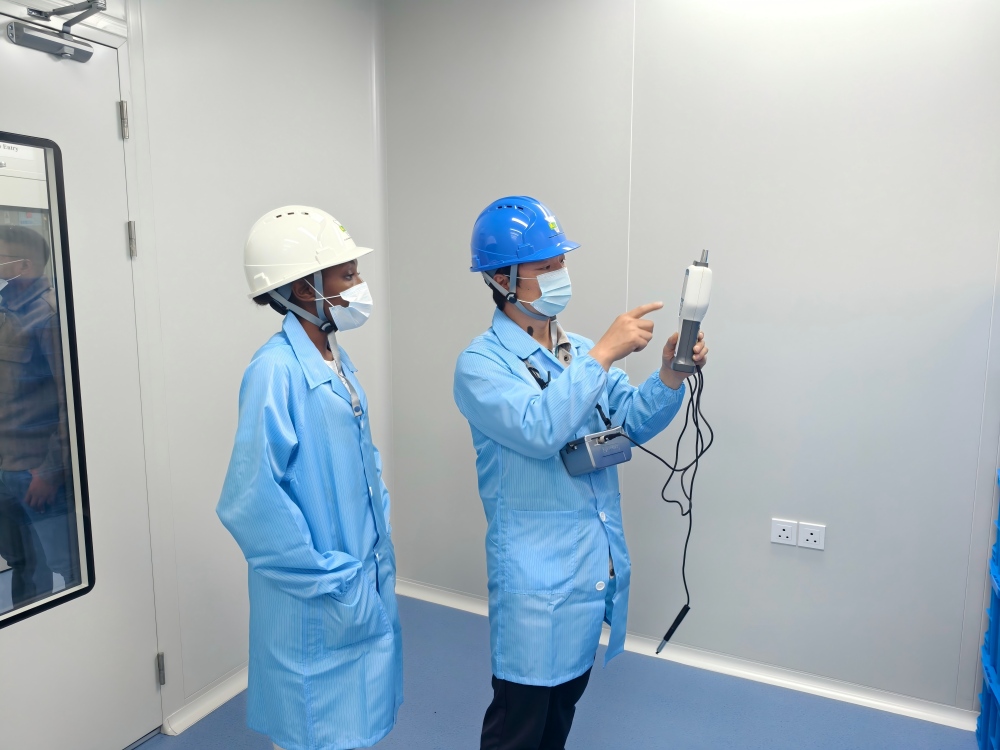
Maintenance work can introduce particles and contamination. The Cleanroom Contamination Control Strategy should define how maintenance activities are controlled in different cleanliness zones.
Maintaining Cleanroom Utilities and Equipment Interfaces
The Cleanroom Utility Systems plan should identify critical components, inspection requirements, and emergency procedures for compressed air, purified water, and electrical systems.
Using Lifecycle Management to Improve ROI
Planned maintenance reduces unexpected failures and protects production schedules. A Turnkey Delivery model can support lifecycle value when design and maintenance planning are coordinated from the start.
Conclusion
Cleanroom maintenance and lifecycle management are essential to long-term facility performance. HVAC systems, HEPA filters, environmental monitoring, utilities, and room finishes must all be maintained through documented, risk-based procedures.
Dersion can integrate maintainability into modular cleanroom design, utility planning, HVAC engineering, commissioning, validation support, and lifecycle documentation.
Post time: Oct-20-2026