
Introduction
A cleanroom is not controlled simply because it was designed and commissioned correctly. It must remain under control during daily operation, equipment start-up, personnel movement, material transfer, cleaning, maintenance, production changes, and the implementation of Modular Cleanroom Solutions.
Cleanroom environmental monitoring provides the data needed to understand whether the controlled environment continues to meet its specified requirements. For regulated facilities, environmental monitoring provides the documented evidence needed to support GMP compliance and demonstrate that the cleanroom remains under control during routine operation.
A practical monitoring program should measure more than airborne particles. Depending on the industry and process, it may also include pressure differential, temperature, relative humidity, airflow behavior, microbiological conditions, and selected contamination risks.
The purpose is not to collect data for its own sake. The purpose is to identify changes early, support reliable production, simplify investigations, and provide objective evidence during audits and quality reviews.
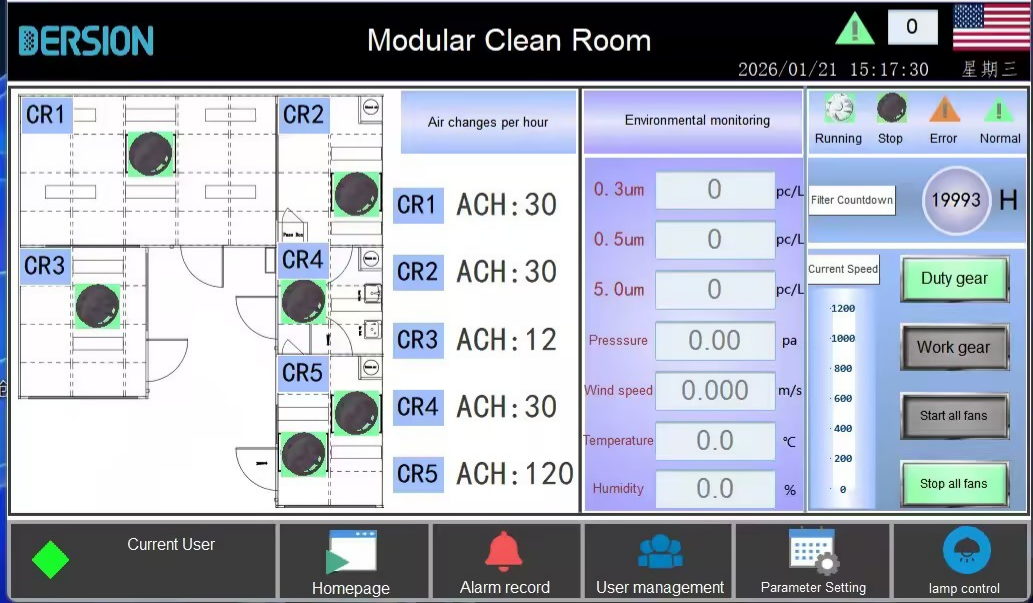
1. What Is Cleanroom Environmental Monitoring?
Cleanroom environmental monitoring is the planned collection, recording, analysis, and review of environmental data from a controlled space.
Data Collection Methods:
- • Fixed particle counters
- • Portable particle counters
- • Differential pressure sensors
- • Temperature sensors
- • Relative humidity sensors
- • Airflow instruments
- • Microbial sampling equipment
- • Data-logging systems
- • Centralized building management systems
- • Manual sampling records
The monitoring program should be connected to the room classification, process risk, equipment arrangement, personnel activity, and applicable regulations.
A low-risk storage room may need a different monitoring strategy from a sterile filling room, an electronics assembly area, or a semiconductor process bay. For this reason, monitoring points should be selected through a documented risk-based assessment instead of using the same sensor layout for every room.
2. Why Environmental Monitoring Matters
2.1 Detecting Environmental Changes Early
A cleanroom may gradually lose performance before an obvious failure occurs. Examples include increasing filter pressure drop, unstable room pressure, or temperature drift. Trend analysis is often more useful.
2.2 Supporting Product Quality
Environmental conditions influence product quality across various industries, from sterile pharmaceutical products to sensitive semiconductor wafers. Monitoring allows comparison with approved limits.
2.3 Supporting Regulatory and Quality Reviews
Auditors need evidence of long-term control. Useful records include monitoring results, calibration certificates, and alarm records.
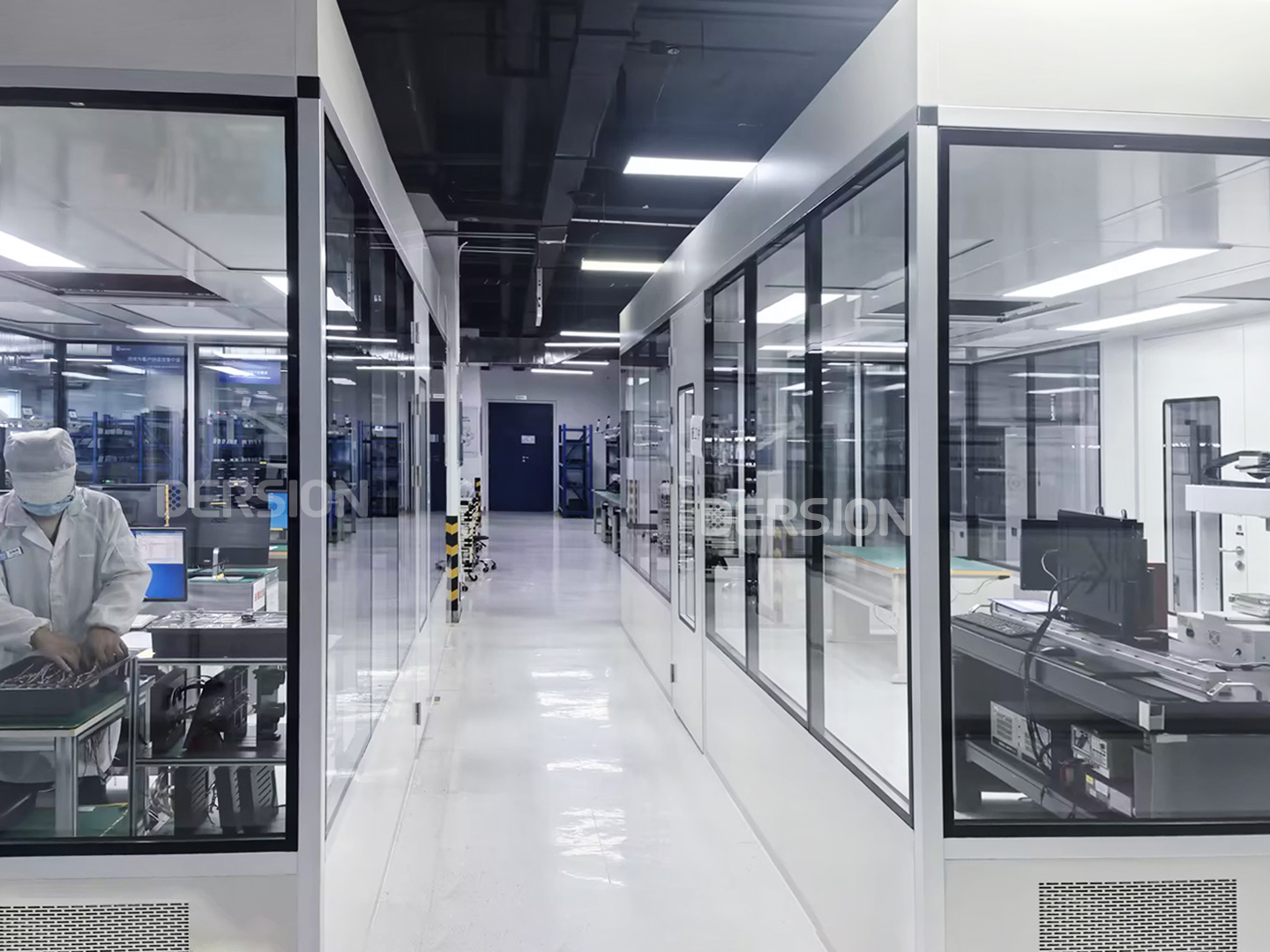
3. What Should a Cleanroom Monitoring System Measure?
3.1 Airborne Particle Concentration
The ISO 14644-1 framework classifies air cleanliness. Routine monitoring evaluates performance during normal operation.
3.2 Pressure Differential
Confirms airflow direction. Data must be interpreted with the Cleanroom HVAC design.
3.3 Temperature and Relative Humidity
Supports product protection and operator comfort. Critical for material stability and static control.
3.4 Airflow and Recovery
Evaluates air exchange rates and uniformity. Important after equipment installation or modification.
3.5 Microbiological Monitoring
Required for pharmaceutical and sterile manufacturing via air/surface sampling and settle plates.
4. Monitoring and Cleanroom Validation
Validation and qualification demonstrate suitability for use. A properly planned cleanroom validation IQ OQ PQ process verifies sensor integrity.
Installation Qualification
Verifies sensor location, calibration status, and wiring.
Operational Qualification
Evaluates alarm performance and data recording.
Performance Qualification
Tests system under actual personnel and equipment loads.
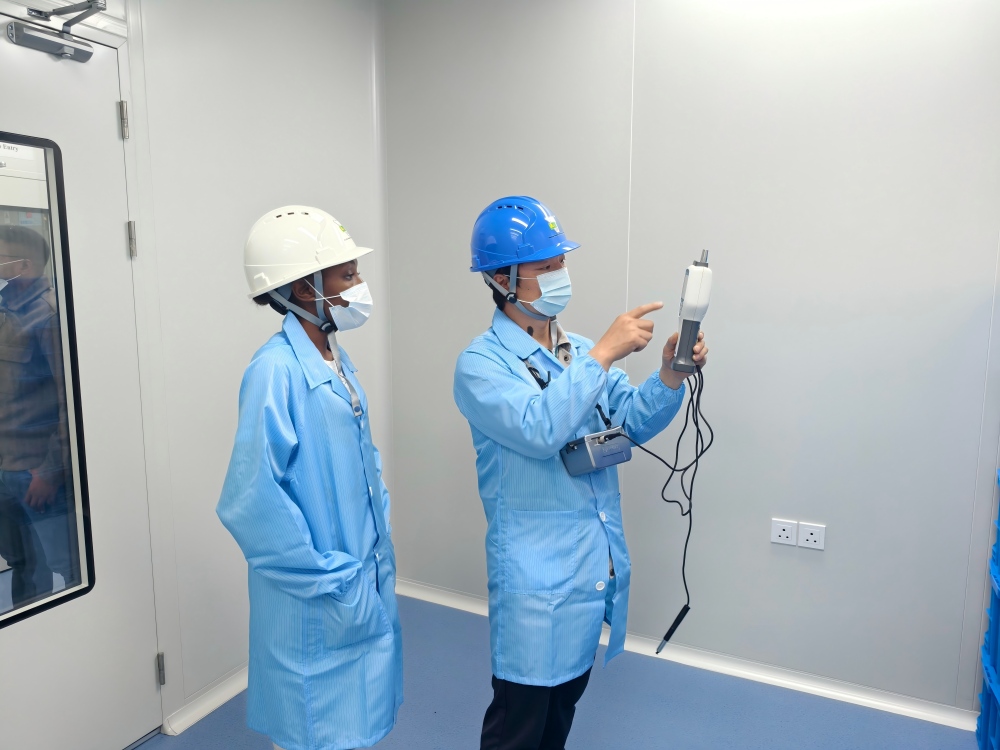
5. Environmental Monitoring by Industry
Pharmaceutical: Focuses on pharmaceutical cleanroom solutions, sterility, and GMP compliance.
Biotechnology: Prioritizes negative pressure and biological containment.
Electronics: Emphasizes electronics cleanroom solutions, ESD risk, and humidity.
Semiconductor: Requires advanced semiconductor cleanroom solutions for molecular contamination and vibration.
6. Designing a Monitoring System Around the Process
The strategy should be coordinated with cleanroom HVAC solutions to measure variables affecting specific manufacturing processes.
Alarm Management
Limits must be practical. Too many leads to alarm fatigue; too few delays response.
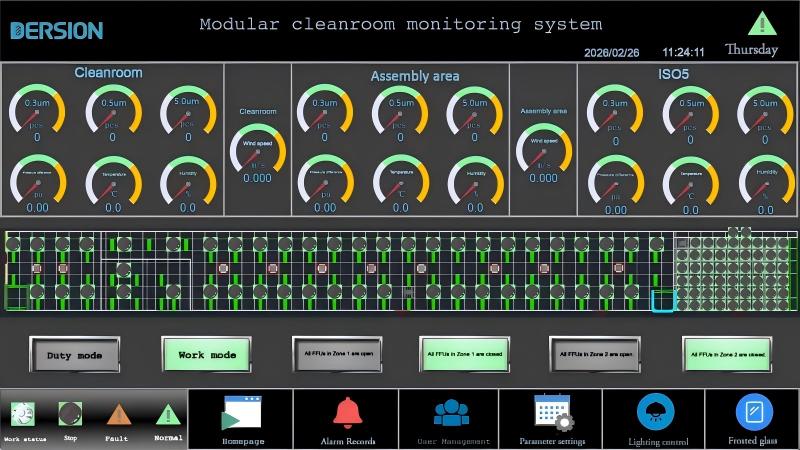
7. Data Integrity
Monitoring data is valuable only when it can be trusted. Trend review reveals problems before formal limits are exceeded.
8. Calibration
Instruments require scheduled calibration and maintenance. Out-of-tolerance findings must trigger a product impact assessment.
9. Facility Changes
Adding equipment or changing layouts requires re-assessment to prevent unplanned effects on product quality.
10. How Dersion Supports Monitoring-Ready Cleanroom Design
Dersion integrates monitoring requirements into modular walls, ceiling systems, and HVAC equipment from the design phase, ensuring easy access for calibration without compromising the room envelope.
11. Benefits of a Well-Designed Program
- ✓ Earlier contamination risk detection
- ✓ Stable production and audit readiness
- ✓ Improved HVAC and maintenance planning
Conclusion
Cleanroom environmental monitoring is essential for long-term performance. Consistent records, calibration, and trend reports are valuable evidence for cleanroom certification and regulatory review.
Dersion’s modular approach integrates these needs from the beginning, resulting in a controlled environment that is easier to operate, validate, and expand.
Post time: Oct-09-2026