
i Introduction
A cleanroom cannot perform reliably through room panels, air filtration, and pressure control alone. Behind every stable pharmaceutical, medical device, semiconductor, or electronics production environment is a carefully coordinated network of cleanroom utility systems.
Compressed air, process gases, purified water, electrical power, drainage, exhaust, cooling, monitoring, and backup systems all influence the safety, stability, and productivity of controlled manufacturing areas. If these utilities are poorly selected or incorrectly integrated, the cleanroom may experience pressure instability, equipment downtime, contamination risks, product-quality problems, or failed validation testing.
For regulated projects, utilities must be considered from the earliest design stage. Their capacity, quality, distribution, monitoring, maintenance, and connection points should be coordinated with the room layout and production equipment.
A successful Modular Cleanroom Solutions project therefore includes more than the construction of a controlled room. It requires an integrated engineering approach that connects cleanroom architecture, HVAC, process equipment, utility infrastructure, validation, and future expansion.
1. Why Utility Systems Are Critical to Cleanroom Performance
Cleanroom utilities directly support the processes taking place inside the controlled environment. A pharmaceutical production line may require purified water, clean steam, compressed air, nitrogen, vacuum, process exhaust, chilled water, and reliable electrical power. A semiconductor facility may additionally require specialty gases, chemical exhaust, ultra-pure water, vibration control, and strict monitoring of process interfaces.
Each utility can affect contamination control and process stability. Compressed air may come into contact with a product, container, equipment surface, or critical process zone. Process gases may influence material properties, chemical reactions, or equipment performance. Water quality may affect cleaning, formulation, rinsing, or product-contact surfaces.
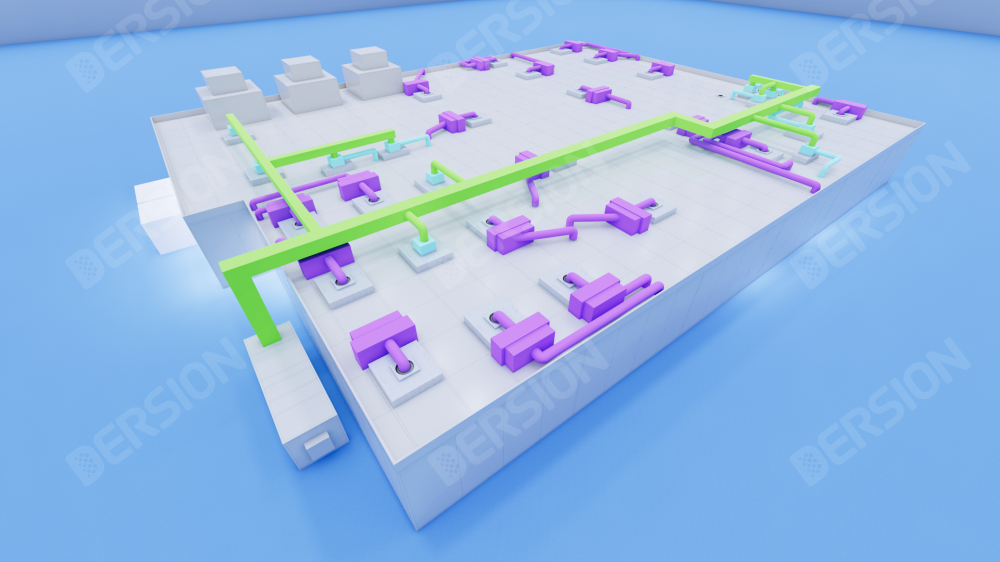
Electrical interruptions can stop HVAC fans, pumps, monitoring systems, production equipment, and access-control systems at the same time. A short power failure may therefore create a chain reaction involving pressure loss, temperature changes, batch interruption, and emergency recovery procedures.
Utility systems should be assessed according to their role in the process. Some services may be general building utilities, while others are critical process utilities that require qualification, monitoring, filtration, sterilization, or documented maintenance.
2. Designing Clean Compressed Air and Process Gas Systems
Compressed air is frequently used for pneumatic equipment, actuator control, component handling, cleaning operations, and process contact. The required air quality depends on how the air is used and whether it comes into direct or indirect contact with the product or critical surfaces.
A clean compressed-air system should be designed around the required pressure, flow rate, dew point, oil control, particle control, microbial risk, and distribution arrangement. The system may require suitable filtration, drying, condensate management, pressure regulation, and sampling points.
The location of the compressor room should also be evaluated. Compressors generate heat, vibration, noise, and condensate. If the equipment is installed too close to controlled areas without suitable separation, it may increase the burden on HVAC systems or create maintenance and contamination concerns.
Distribution piping should minimize dead legs, leakage points, difficult-to-clean sections, and unnecessary pressure drops. Pipe materials and internal finishes should be selected according to the utility’s quality requirements and the applicable process conditions.
3. Purified Water, Clean Steam, and Drainage
Water systems are among the most important utilities in pharmaceutical and biotechnology facilities. Depending on the process, the facility may require purified water, water for injection, clean steam, process water, or specialized water-treatment systems.
The selected water system should match the intended use. Water used for equipment cleaning may have different requirements from water used as a formulation ingredient or for final rinsing of product-contact parts. The design should define the required quality, storage capacity, circulation method, temperature range, sampling points, and sanitization approach.
These requirements should be coordinated with GMP compliance and the facility’s contamination control strategy. A utility system may meet its mechanical design requirements but still create a quality risk if its interfaces with the cleanroom are not properly controlled.
4. Integrating HVAC with Utility and Process Equipment
HVAC is closely connected to utility design because equipment and utility systems generate heat, moisture, exhaust, vibration, and airflow disturbances. The Cleanroom HVAC design must therefore be coordinated with the complete equipment and utility schedule.
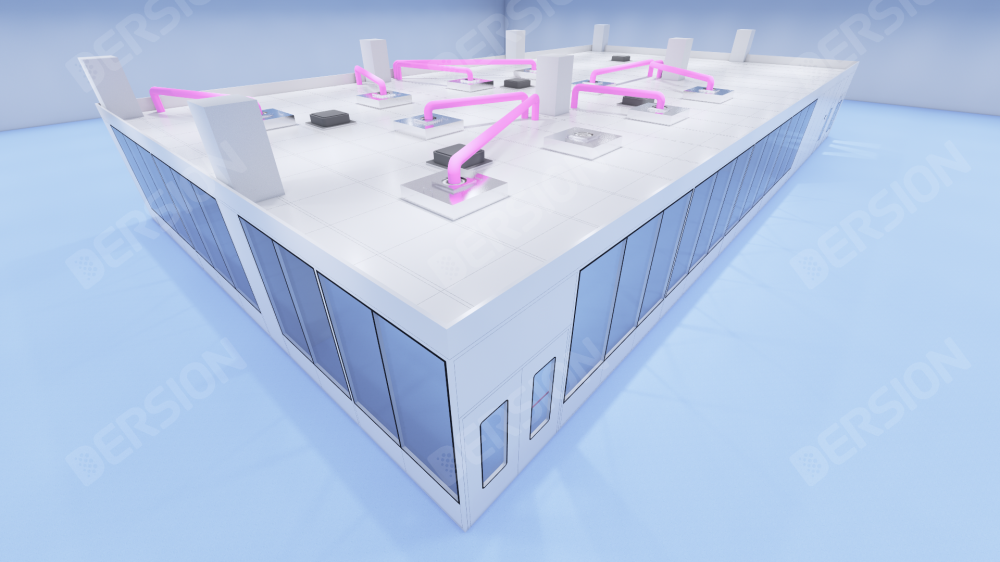
Production equipment can create substantial heat loads. Compressors, pumps, electrical cabinets, ovens, sterilizers, process tools, and inspection systems may change room temperature and humidity if their loads are not included in the HVAC calculations.
5. Electrical Power, Controls, and Backup Systems
Reliable electrical power is essential for maintaining cleanroom environmental conditions. Power is required for air-handling units, fans, pumps, FFUs, monitoring systems, access controls, lighting, production equipment, alarms, and data systems.
The electrical design should distinguish between normal loads, critical loads, emergency loads, and equipment-specific loads. Critical HVAC and monitoring systems may require connection to an emergency generator, uninterruptible power supply, or another backup arrangement.
6. Utility Qualification, Validation, and Documentation
Utility systems that affect product quality or controlled environmental performance should be included in the facility’s qualification and validation plan. This is particularly important for pharmaceutical, biotechnology, medical device, and other regulated applications.
The cleanroom validation IQ OQ PQ process should address the installation, operation, and performance of relevant utility systems.
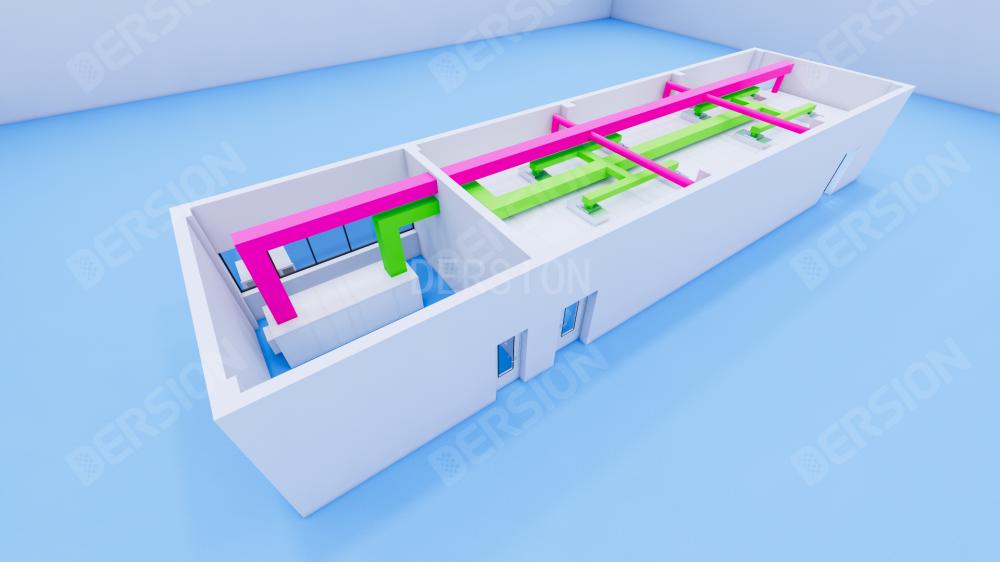
The European Commission’s EudraLex Volume 4 GMP guidance provides the broader regulatory framework for pharmaceutical manufacturing. For sterile products, EU GMP Annex 1 emphasizes contamination control.
7. Designing for Maintenance, Expansion, and ROI
Utility systems should be designed for the full lifecycle of the facility rather than only for initial construction. Filters, pumps, compressors, sensors, valves, tanks, electrical panels, and control components all require inspection and maintenance.
This is where a Turnkey Delivery approach can improve project coordination. When design, utility engineering, cleanroom construction, equipment interfaces, commissioning, and documentation are managed as one coordinated scope, the project team can identify conflicts earlier.
Conclusion
Cleanroom utility systems are the technical infrastructure that allows controlled manufacturing environments to operate safely and consistently. Compressed air, process gases, purified water, clean steam, drainage, electrical power, backup systems, HVAC, monitoring, and equipment interfaces must be designed as one connected system.
Dersion can integrate cleanroom architecture, HVAC, process utilities, electrical systems, equipment interfaces, validation support, and modular construction into a coordinated project solution.
Post time: Oct-14-2026