
Introduction
A cleanroom may have advanced HVAC systems, HEPA filtration, pressure control, environmental monitoring, and validated equipment, but these systems alone do not demonstrate compliance. In a regulated manufacturing environment, the facility must also be supported by complete, accurate, controlled, and traceable documentation.
Documentation provides evidence of how the cleanroom was designed, constructed, qualified, operated, cleaned, maintained, monitored, and changed. It allows operators to follow approved procedures and enables quality teams, auditors, and regulators to verify that the facility remains under control.
For pharmaceutical, biotechnology, medical device, semiconductor, and other high-technology facilities, documentation should not be created only before an inspection. It should be integrated into daily operations and connected to the facility’s quality management system.
A well-organized Modular Cleanroom Solutions project should include document planning from the design stage. URS, design reviews, commissioning records, qualification reports, operating procedures, maintenance logs, environmental data, deviations, and change-control records should form one consistent information chain.
The objective of GMP audit readiness is not to create paperwork for its own sake. It is to ensure that the facility can clearly demonstrate what was required, what was done, who performed the work, what results were obtained, and how abnormal conditions were handled.
Building a Complete Cleanroom Documentation System
A cleanroom documentation system should reflect the full lifecycle of the facility. It should begin with project requirements and continue through design, construction, qualification, production, maintenance, modification, and eventual expansion or decommissioning.
URS, design basis, risk assessments, contamination control strategy, validation master plan, and room classification.
Architectural drawings, HVAC schematics, pressure-cascade diagrams, equipment specs, and room data sheets.
SOPs, cleaning logs, gowning records, EM data, calibration, maintenance, and deviation reports.
The official EudraLex Volume 4 GMP framework provides the broader European regulatory context for pharmaceutical quality systems, premises, equipment, documentation, and production controls.
Controlling SOPs and Work Instructions
Standard Operating Procedures provide the approved method for performing recurring activities. In a cleanroom, SOPs should cover activities that influence contamination control, environmental performance, product quality, safety, and compliance.
The GMP compliance requirements should be translated into clear operating instructions. Operators should understand not only what they must do but also which risks the procedure controls.
Training must be completed before an SOP becomes effective. Training records should identify the procedure version, employee, trainer, date, and method used to confirm understanding.
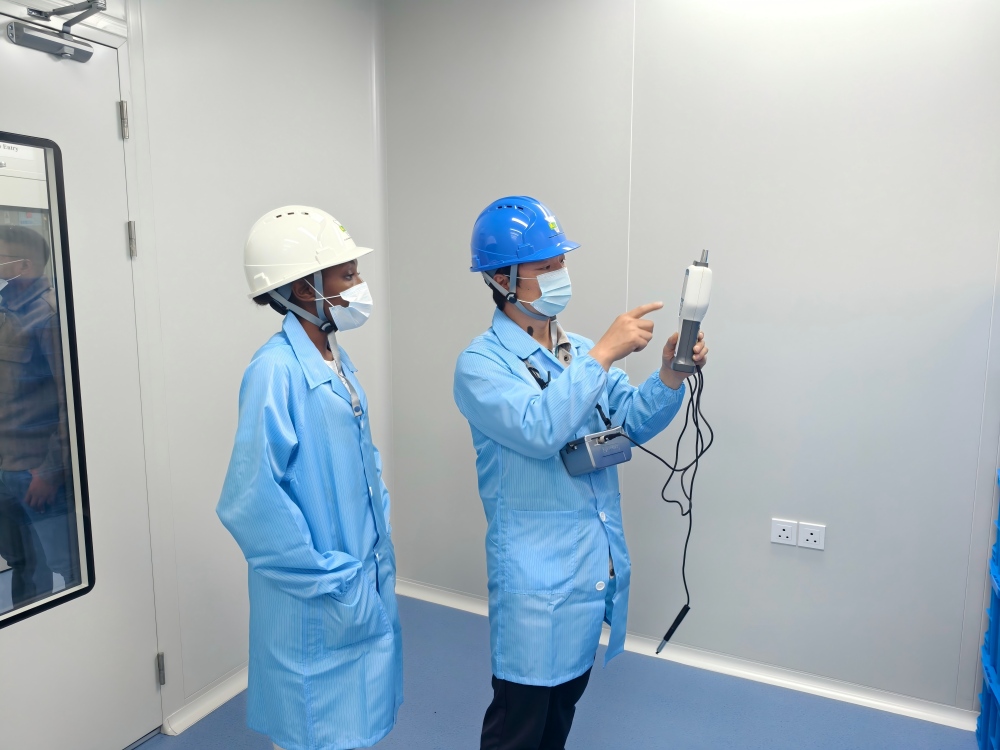
Maintaining Validation and Qualification Records
Qualification and validation documents provide evidence that the cleanroom and its systems meet predefined requirements.
The EU GMP Annex 15 guidance on qualification and validation emphasizes a structured approach to qualification and validation based on process risks.
Managing Environmental Monitoring and Maintenance Records
Environmental monitoring records show whether the cleanroom continues to operate within approved conditions during routine production.
The Cleanroom Environmental Monitoring records should identify locations, dates, instrument, result, alert/action limits, and investigations.
⚙ Maintenance & Lifecycle
Maintenance records provide evidence that systems are kept in a controlled condition. A complete record allows an auditor to understand the condition of the facility over time, not just the result of the most recent inspection.
Controlling Deviations, Change Control, and CAPA
A deviation is a departure from an approved procedure or specification. Cleanroom-related deviations may include pressure excursions, failed HEPA tests, or environmental alerts.
The Cleanroom Contamination Control Strategy should support the impact assessment for any planned modifications through formal Change Control.
Investigation should focus on the actual root cause rather than stopping at the most visible symptom.
Protecting Data Integrity and Record Reliability
Audit readiness depends not only on having records but also on being able to trust them. Records should be attributable, legible, contemporaneous, original, accurate, complete, consistent, enduring, and available (ALCOA+).
Electronic systems require particular attention: user access controls, audit trails, and backup arrangements are critical for environmental monitoring and building-management systems.
Preparing the Cleanroom for a GMP Audit
Audit preparation should be a continuous state, not a temporary effort. The quality team should verify that current SOPs are at points of use and qualification documents are approved.
Documentation for Cleanroom Utility Systems (compressed air, water, electrical) must be readily available.
For sterile facilities, the EU GMP Annex 1 guidance provides the benchmark for contamination control and documentation expectations.
Conclusion
Post time: Nov-03-2026