
Introduction
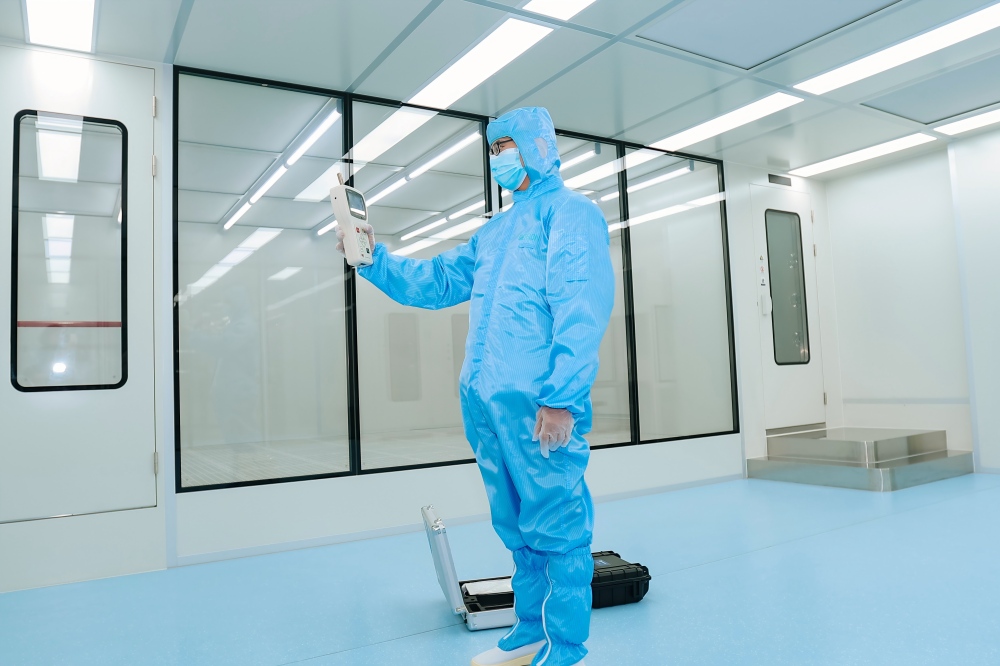
The completion of cleanroom construction does not mean that the facility is ready for manufacturing. Before production begins, the facility must demonstrate that its rooms, HVAC systems, utilities, monitoring equipment, controls, and operational procedures work together as intended.
This transition is managed through cleanroom commissioning and qualification. Commissioning confirms that installed systems have been started, adjusted, tested, and integrated correctly. Qualification provides documented evidence that the facility and its systems can consistently meet predefined requirements under specified operating conditions.
For pharmaceutical, biotechnology, medical device, semiconductor, and electronics facilities, this stage connects construction with safe production. It identifies installation defects, control-system problems, airflow issues, pressure instability, equipment-interface errors, and documentation gaps before they become operational failures.
A structured Modular Cleanroom Solutions delivery model should include commissioning and qualification planning from the early design stage. This allows the project team to define acceptance criteria, testing responsibilities, documentation requirements, and production-release conditions before construction is complete.
The objective is not simply to obtain a collection of test reports. The objective is to create a controlled, documented, and reproducible facility that can support its intended process and maintain its required performance over time.
1 Commissioning and Qualification: What Is the Difference?
Commissioning and qualification are closely connected, but they are not identical activities.
A cleanroom may be mechanically complete but not ready for qualification. Commissioning helps bring the facility to a stable and testable condition. Qualification then evaluates whether that condition meets the approved requirements.
The EU GMP Annex 15 guidance on qualification and validation provides a key reference for qualification and validation principles applied to facilities, systems, equipment, and processes.
2 Preparing for Commissioning Before Construction Is Complete
Successful commissioning begins before the last panel, duct, sensor, or utility connection is installed. The Cleanroom Design Qualification should provide the foundation for this planning.
- Verify the cleanroom envelope, HVAC, HEPA filtration, and controls.
- Confirm all surfaces are sealed and panels are undamaged.
- Ensure drawings reflect the actual installation (As-built).
- Collect equipment manuals, material certificates, and calibration records.
3 Using FAT and SAT to Reduce Start-Up Risk
Factory Acceptance Testing (FAT) and Site Acceptance Testing (SAT) can reduce the risk of discovering major system problems after installation.
FAT (Factory)
Performed at the supplier’s facility. Verifies construction, control panels, software sequences, and alarm logic before shipping.
SAT (Site)
Performed after installation at the project site. Verifies correct connection, integration, and operation under real site conditions.
The Cleanroom Utility Systems requirements should be included in FAT and SAT planning.
4 Executing IQ, OQ, and PQ
The cleanroom validation IQ OQ PQ process is a holistic demonstration of facility readiness. Follow the FDA guidance on Process Validation for best practices.
5 Performing Cleanroom Environmental Tests
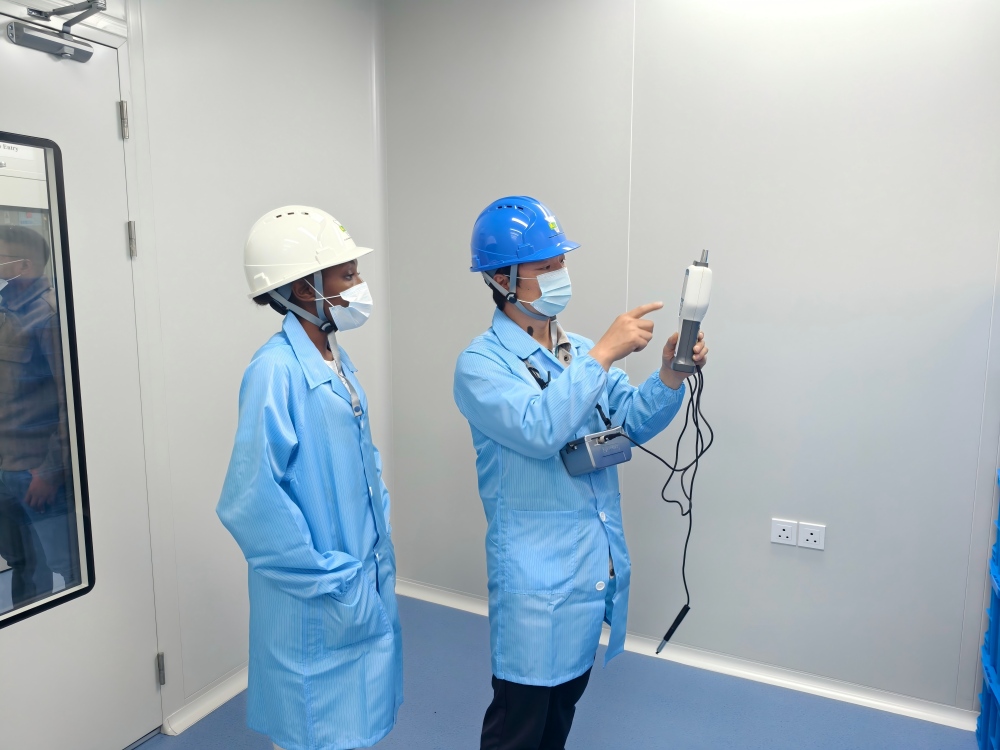
Environmental testing is critical. Common tests include HEPA integrity, airflow volume, pressure differentials, and particle classification.
Refer to the Cleanroom Environmental Monitoring plan for risk-based location selection. For sterile manufacturing, EU GMP Annex 1 provides essential expectations.
6 Managing Deviations, Retesting, and Documentation
Qualification rarely proceeds without deviations. A failed test must be documented, investigated, and corrected. Use the Cleanroom Contamination Control Strategy to guide impact assessments.
7 Releasing the Cleanroom for Production
Release occurs only after verifying construction, commissioning, and IQ/OQ/PQ results. Key management programs include:
- Maintenance & Lifecycle
- Energy Efficiency Strategy
- Response Plans for Alarms
- Change Control Systems
Conclusion
Cleanroom commissioning and qualification provide the controlled transition from construction completion to reliable production. Dersion supports this process through modular design, HVAC integration, and lifecycle documentation, helping manufacturers enter production with confidence.
Post time: Oct-27-2026