
As Saudi Arabia accelerates industrial development under Vision 2030, manufacturers are seeking faster and more flexible ways to establish controlled production environments. Traditional cleanroom construction often requires long project timelines, extensive on-site work, and complex coordination among multiple contractors.
Modular cleanrooms have emerged as a practical alternative, allowing pharmaceutical, medical device, food processing, and high-tech manufacturers to deploy compliant cleanroom facilities faster while maintaining strict contamination control standards. For pharmaceutical manufacturers seeking GMP compliance, understanding pharmaceutical cleanroom requirements in Saudi Arabia is often the first step when planning a new facility.
Why Modular Cleanrooms Are Growing in Saudi Arabia
Industrial projects in Saudi Arabia often face tight production schedules and aggressive market entry targets. Manufacturers cannot afford long delays caused by conventional construction methods.
A modular cleanroom offers several advantages:
- Faster project execution
- Factory-controlled manufacturing quality
- Reduced on-site construction activities
- Easier future expansion
- Lower project risk
- Predictable installation schedules
These advantages make modular cleanrooms increasingly attractive for manufacturers seeking operational flexibility and faster return on investment.
What Is a Modular Cleanroom?
A modular cleanroom is a prefabricated cleanroom system manufactured using standardized wall panels, ceiling systems, doors, windows, and cleanroom components that are assembled on-site.
Unlike traditional cleanrooms built entirely through permanent construction, modular systems are engineered for flexibility and scalability.
A typical modular cleanroom includes:
- Cleanroom wall panels
- Ceiling systems
- HVAC integration
- HEPA filtration systems
- Air showers
- Pass boxes
- LED cleanroom lighting
- Monitoring and control systems
These systems can be customized to meet ISO 14644 classification requirements and industry-specific regulations.
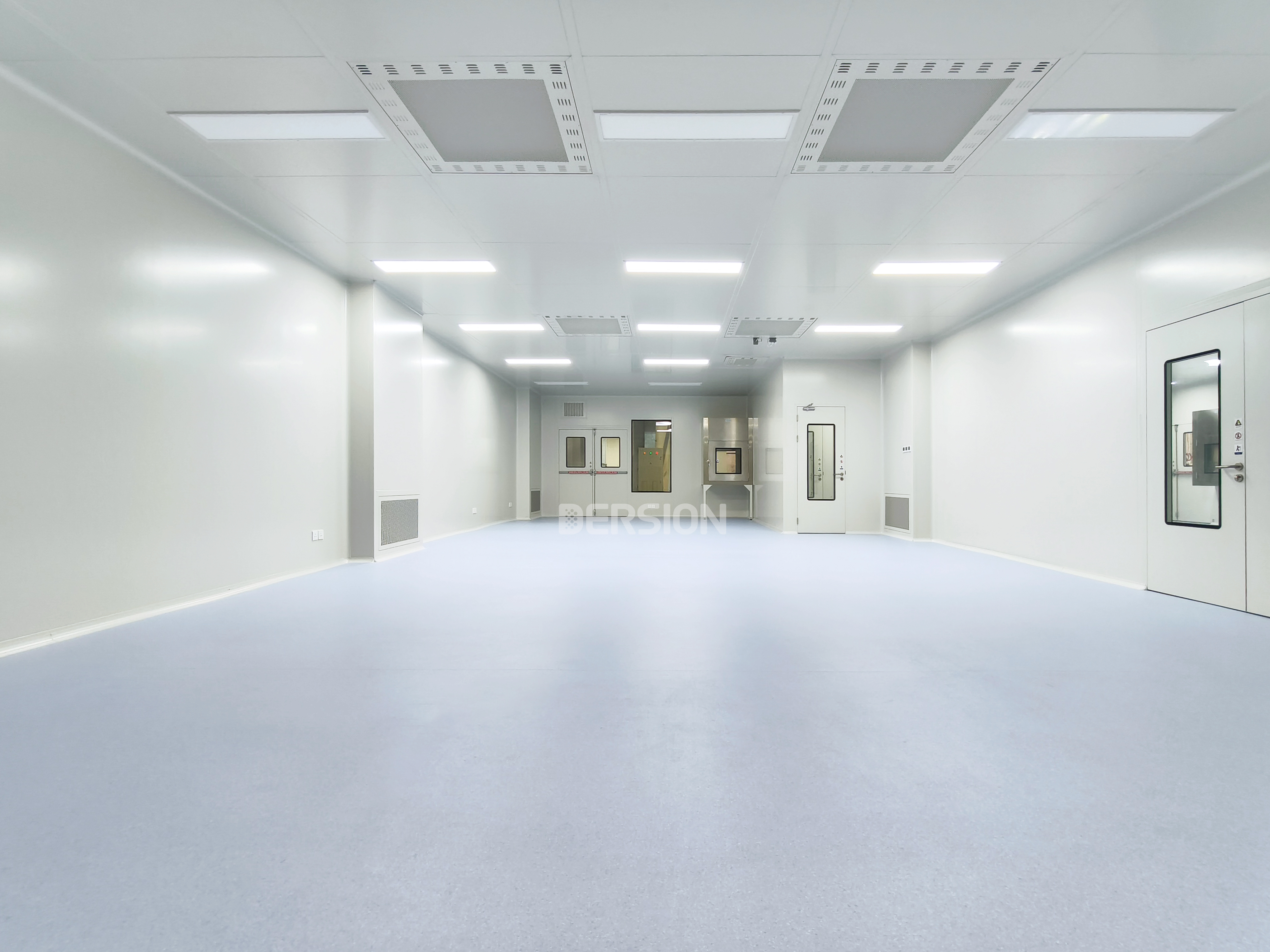
Industries Using Modular Cleanrooms in Saudi Arabia
Pharmaceutical Manufacturing
Pharmaceutical companies require GMP-compliant cleanrooms for:
- Tablet production
- Capsule manufacturing
- Sterile drug production
- Biotechnology facilities
- Pharmaceutical packaging
Manufacturers seeking regulatory compliance often benefit from modular pharmaceutical cleanroom solutions that reduce construction timelines while supporting validation requirements.
Medical Device Manufacturing
Medical device producers commonly use modular cleanrooms for:
- Surgical instrument assembly
- Implant manufacturing
- Diagnostic device production
- Catheter production
- Medical packaging operations
As local medical manufacturing expands, demand for modular medical device cleanrooms continues to increase. Manufacturers should also understand the specific medical device cleanroom requirements applicable to regulated production environments.
Food and Beverage Processing
Food manufacturers use cleanrooms to improve product quality and reduce contamination risks during:
- Food packaging
- Nutritional supplement production
- Beverage processing
- Specialty food manufacturing
Modular cleanrooms provide a practical solution for rapidly expanding food production facilities.
Faster Project Delivery Compared with Traditional Construction
One of the biggest advantages of modular construction is speed.
Traditional cleanroom projects often involve:
- Multiple contractors
- Extended civil construction work
- Lengthy site coordination
- Higher schedule uncertainty
Modular cleanroom systems are largely manufactured before shipment, allowing parallel execution of manufacturing and site preparation activities.
This approach can significantly shorten overall project schedules and help manufacturers start production sooner.
Scalable Design for Future Expansion
Manufacturing requirements rarely remain static.
As production capacity increases, facilities often require:
- Additional cleanroom space
- New production lines
- Expanded packaging areas
- Additional personnel flow zones
Modular cleanroom systems are specifically designed to support future expansion with minimal disruption to existing operations.
This flexibility is particularly valuable for growing pharmaceutical and medical device companies in Saudi Arabia.
Reducing Construction Risks
Construction risks can affect project budgets, timelines, and compliance objectives.
Modular cleanrooms help reduce risks by:
- Minimizing on-site fabrication
- Improving manufacturing consistency
- Reducing installation complexity
- Lowering dependence on local construction resources
- Improving quality control before shipment
Factory-controlled production environments typically achieve higher consistency than traditional site-built construction methods.
Containerized Shipping for International Projects
A major advantage of modular cleanroom systems is their suitability for international transportation.
Cleanroom components can be efficiently packed into shipping containers and delivered worldwide.
Benefits include:
- Simplified logistics
- Reduced transportation costs
- Improved protection during transit
- Easier customs handling
- Predictable delivery schedules
For Saudi Arabian projects, containerized transportation allows manufacturers to access high-quality cleanroom systems from experienced international suppliers.
Overseas Installation Support
Many international projects require technical guidance during installation and commissioning.
Professional cleanroom suppliers typically provide:
- Installation drawings
- Assembly manuals
- Remote technical support
- Online installation guidance
- Equipment commissioning assistance
- Operator training support
These services help local installation teams complete projects efficiently while ensuring compliance with project specifications.
ISO Cleanroom Compliance
Modular construction does not compromise cleanroom performance. Modern modular systems are designed according to ISO 14644 cleanroom classification standards to ensure reliable contamination control.
Properly engineered modular cleanrooms can achieve:
- ISO 8 Cleanrooms
- ISO 7 Cleanrooms
- ISO 6 Cleanrooms
- ISO 5 Cleanrooms
Compliance is achieved through proper design of:
- Airflow patterns
- HEPA filtration systems
- HVAC integration
- Pressure differentials
- Environmental monitoring systems
Manufacturers can therefore achieve the same contamination control standards as traditional cleanroom facilities.
How to Choose a Cleanroom Contractor in Saudi Arabia
When evaluating a cleanroom contractor, manufacturers should consider:
Industry Experience
Experience in pharmaceutical, medical device, and food manufacturing projects is critical.
Compliance Knowledge
A qualified supplier should also understand the cleanroom validation process, including qualification documentation and testing procedures required before production begins.
The supplier should understand:
- ISO 14644 requirements
- GMP principles
- Validation requirements
- Contamination control strategies
Engineering Capabilities
Look for suppliers capable of supporting:
- Cleanroom design
- HVAC integration
- Equipment selection
- Installation guidance
Global Project Experience
International project experience often improves project execution and reduces risk.
Why Choose Dersion
Dersion has more than 20 years of experience in cleanroom engineering and modular cleanroom manufacturing.
Our capabilities include:
Our engineering team also supports pharmaceutical HVAC system design, helping customers achieve stable temperature, humidity, airflow, and pressure control.
- Modular cleanroom systems
- Cleanroom wall and ceiling panels
- Air showers
- Pass boxes
- FFU systems
- Cleanroom accessories
- International shipping support
- Installation guidance
With a 20,000㎡ smart manufacturing facility and extensive export experience, Dersion provides reliable cleanroom solutions for customers worldwide.
Conclusion
As Saudi Arabia continues to expand pharmaceutical, medical device, and food manufacturing industries, modular cleanrooms are becoming the preferred solution for companies seeking rapid deployment, flexibility, and regulatory compliance.
A properly designed Modular Cleanroom Saudi Arabia project can shorten construction timelines, reduce project risks, support future expansion, and achieve ISO-compliant contamination control performance.
For manufacturers seeking a balance between speed, quality, and scalability, modular cleanroom systems offer a highly effective long-term solution.
Frequently Asked Questions
What is the difference between a modular cleanroom and a traditional cleanroom?
Modular cleanrooms use prefabricated components manufactured off-site, allowing faster installation and easier future expansion.
Can modular cleanrooms achieve ISO certification?
Yes. Properly designed modular cleanrooms can achieve ISO 5, ISO 6, ISO 7, and ISO 8 classifications.
Are modular cleanrooms suitable for pharmaceutical manufacturing?
Absolutely. Modular cleanrooms are widely used in pharmaceutical facilities and can support GMP-compliant production environments.
Can modular cleanrooms be expanded later?
Yes. One of the major advantages of modular construction is the ability to expand or reconfigure facilities with minimal disruption.
How are modular cleanrooms delivered to Saudi Arabia?
Most systems are shipped in containers, allowing efficient international transportation and on-site assembly.
Post time: Jun-05-2026