
Saudi Arabia is rapidly expanding its pharmaceutical manufacturing sector under Vision 2030, with increasing investments in local drug production, biotechnology, vaccines, and sterile pharmaceutical products. As pharmaceutical companies scale their operations, GMP-compliant cleanroom facilities have become essential to ensure product quality, patient safety, and regulatory compliance.
A pharmaceutical cleanroom is more than a controlled environment—it is a critical component of a compliant manufacturing system that supports contamination control, process consistency, and successful regulatory inspections.
Why Pharmaceutical Cleanrooms Are Essential
Pharmaceutical products are highly sensitive to contamination from airborne particles, microorganisms, temperature fluctuations, and human activity. Even minor contamination events can result in product recalls, regulatory findings, and financial losses.
Cleanrooms are commonly used for:
- Oral solid dosage manufacturing
- Injectable drug production
- Sterile pharmaceutical manufacturing
- Vaccine production
- Biotechnology processing
- Pharmaceutical packaging operations
- Research and development laboratories
A properly designed pharmaceutical cleanroom minimizes contamination risks while ensuring compliance with international GMP standards and current Good Manufacturing Practices (cGMP), helping manufacturers maintain product quality and regulatory compliance.
Many cleanroom design principles used in pharmaceutical facilities are also applied in medical device manufacturing. Understanding the requirements of a medical device manufacturing cleanroom can help manufacturers establish effective contamination control strategies across multiple regulated industries.
GMP Requirements for Pharmaceutical Cleanrooms
Good Manufacturing Practice (GMP) guidelines establish the framework for pharmaceutical production facilities.
A GMP-compliant cleanroom should address:
Facility Design
- Smooth and easy-to-clean surfaces
- Controlled personnel flow
- Controlled material flow
- Segregation of production areas
- Cross-contamination prevention measures
Environmental Control
- Temperature control
- Humidity control
- Particle control
- Microbial monitoring
- Pressure cascade management
Documentation and Traceability
- Standard operating procedures (SOPs)
- Validation documentation
- Maintenance records
- Environmental monitoring records
GMP compliance is not limited to cleanroom construction. It involves the entire facility lifecycle, from design and qualification to operation and maintenance.
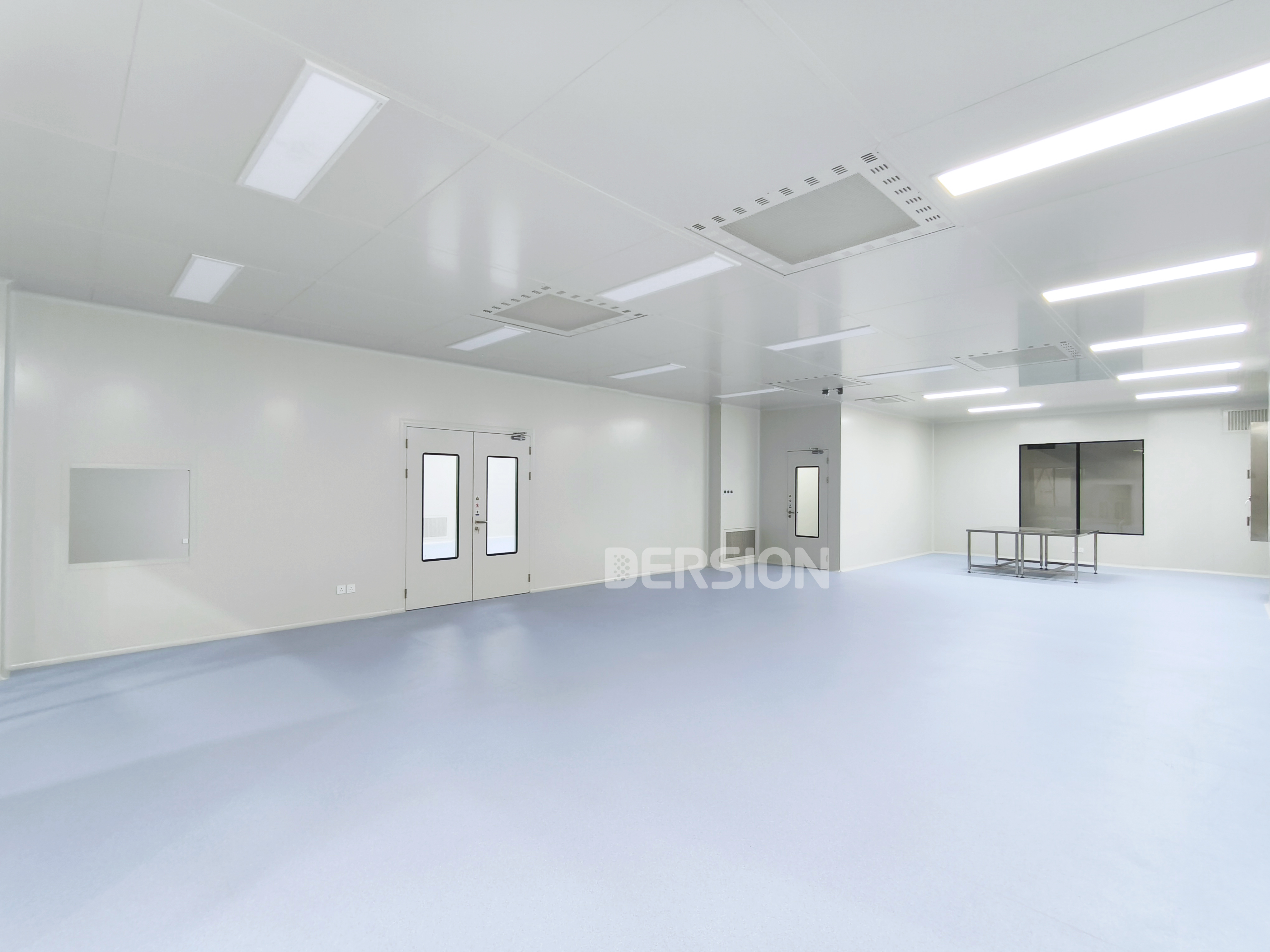
SFDA Regulatory Considerations
Pharmaceutical manufacturers operating in Saudi Arabia must ensure compliance with requirements established by the Saudi Food and Drug Authority (SFDA).
Key considerations include:
- GMP compliance
- Facility qualification
- Environmental monitoring programs
- Product quality management systems
- Risk-based contamination control strategies
Facilities designed according to international GMP standards are generally better prepared for regulatory inspections and market authorization requirements.
Cleanroom Classifications for Pharmaceutical Manufacturing
Different pharmaceutical processes require different cleanroom classifications.
| Production Area | Typical ISO Classification |
|---|---|
| Secondary Packaging | ISO 8 |
| General Manufacturing | ISO 7 |
| Critical Processing | ISO 6 |
| Sterile Filling Areas | ISO 5 |
For sterile manufacturing environments, stricter contamination control measures are required to protect product integrity.
Pharmaceutical HVAC Systems: The Heart of Contamination Control
The HVAC system is one of the most important elements of a pharmaceutical cleanroom.
A properly engineered Pharmaceutical HVAC System provides:
- HEPA-filtered air supply
- Controlled air changes per hour
- Temperature stability
- Humidity regulation
- Pressure differential control
- Contamination containment
In Saudi Arabia, HVAC design is particularly important due to high outdoor temperatures and demanding environmental conditions.
Energy-efficient HVAC systems help pharmaceutical manufacturers reduce operating costs while maintaining GMP compliance.
Pressure Differential Control in Pharmaceutical Cleanrooms
Pressure differentials are essential for preventing contamination migration between adjacent areas.
Typical pressure control strategies include:
Positive Pressure
Used in sterile manufacturing areas to prevent contaminants from entering critical production zones.
Negative Pressure
Used for hazardous products, potent compounds, or containment applications to prevent contaminants from escaping.
Pressure Cascades
Pressure gradients are established between rooms to control airflow direction and maintain cleanroom integrity.
Effective pressure management is a fundamental requirement during GMP inspections and facility qualification.
Cleanroom Validation: DQ, IQ, OQ, and PQ
A comprehensive cleanroom validation process is essential for demonstrating compliance with GMP requirements and ensuring consistent facility performance.
Validation is a critical component of pharmaceutical cleanroom compliance.
Design Qualification (DQ)
Confirms that the proposed cleanroom design meets user requirements and regulatory expectations.
Installation Qualification (IQ)
Verifies that cleanroom systems and equipment are installed correctly according to approved specifications.
Operational Qualification (OQ)
Demonstrates that cleanroom systems operate within predefined parameters.
Performance Qualification (PQ)
Confirms that the cleanroom consistently performs as intended under actual operating conditions.
A complete validation package provides documented evidence that the facility is fit for pharmaceutical manufacturing.
Preparing for Pharmaceutical Audits
Regulatory inspections and customer audits often focus on:
- HVAC performance
- Cleanroom classification testing
- Environmental monitoring
- Validation records
- Personnel training
- Maintenance programs
- Contamination control procedures
Manufacturers that incorporate audit readiness during the design stage can significantly reduce compliance risks later.
Why Modular Pharmaceutical Cleanrooms Are Gaining Popularity
Many pharmaceutical manufacturers in Saudi Arabia are adopting modular cleanroom systems because they offer:
- Faster project completion
- Reduced construction disruption
- Flexible expansion capabilities
- Consistent quality control
- Easier future upgrades
Modular construction can shorten project schedules while maintaining compliance with ISO 14644 and GMP requirements.
Many pharmaceutical manufacturers in Saudi Arabia are adopting modular pharmaceutical cleanroom solutions because they offer faster deployment, reduced construction risk, and greater flexibility for future expansion.
Why Choose Dersion for Pharmaceutical Cleanroom Projects
Dersion specializes in cleanroom engineering solutions for pharmaceutical, biotechnology, and healthcare manufacturing industries.
Our capabilities include:
- Modular pharmaceutical cleanrooms
- Cleanroom wall and ceiling systems
- Pharmaceutical HVAC support
- HEPA filtration systems
- Air showers and pass boxes
- Cleanroom accessories and equipment
- International project delivery
With more than 20 years of industry experience, Dersion helps pharmaceutical manufacturers build compliant, scalable, and efficient cleanroom environments.
Conclusion
As Saudi Arabia continues to strengthen its pharmaceutical manufacturing capabilities, GMP-compliant cleanrooms are becoming increasingly important for regulatory compliance and product quality assurance.
A successful Pharmaceutical Cleanroom Saudi Arabia project requires careful planning of HVAC systems, pressure control, validation activities, and contamination control strategies. Manufacturers that invest in compliant cleanroom infrastructure today will be better positioned for future growth and regulatory success.
Frequently Asked Questions
What cleanroom class is required for pharmaceutical manufacturing?
Most pharmaceutical manufacturing areas operate within ISO 7 or ISO 8 environments, while sterile filling operations typically require ISO 5 conditions.
What is the role of HVAC in pharmaceutical cleanrooms?
HVAC systems control airborne particles, temperature, humidity, and pressure differentials, making them essential for GMP compliance.
What does DQ, IQ, OQ, and PQ mean?
These are the four major qualification stages used to validate pharmaceutical cleanroom performance and regulatory compliance.
Can modular cleanrooms meet pharmaceutical GMP requirements?
Yes. Properly designed modular cleanrooms can fully comply with GMP standards and are widely used in pharmaceutical manufacturing facilities worldwide.
- Saudi Food and Drug Authority (SFDA)
- World Health Organization GMP Guidelines
- ISO 14644 Cleanroom Standards Information
Post time: Jun-05-2026