
Introduction Cleanrooms are notorious for their high energy density, often consuming up to 50 times more energy than standard office buildings. In an era of rising utility costs and global sustainability mandates, optimizing your facility’s energy footprint is no longer optional. Implementing energy efficient cleanroom strategies is the most effective way to secure a competitive ROI while maintaining strict ISO compliance.
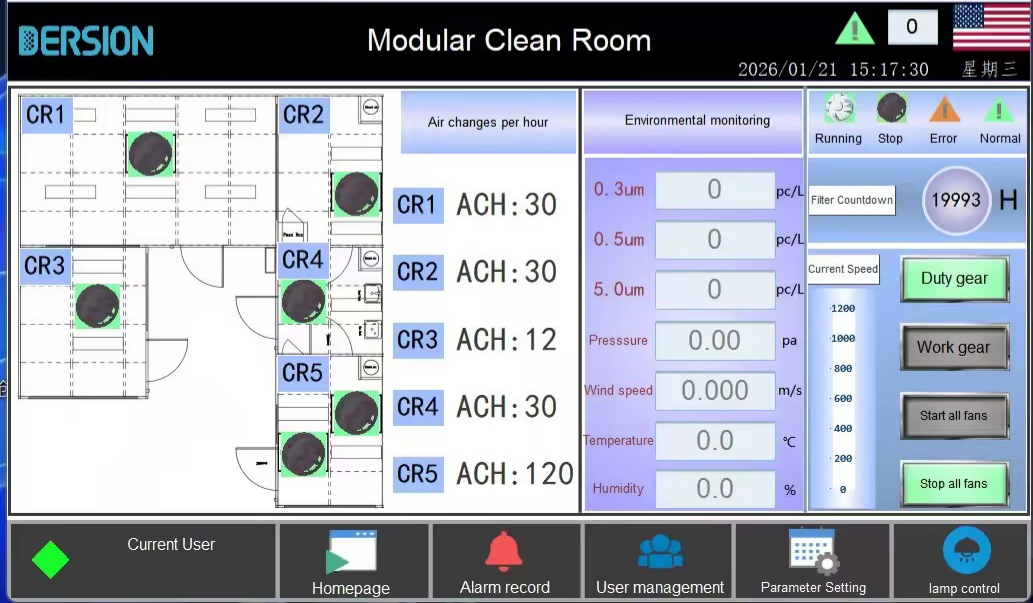
Strategic Airflow Management
Air movement accounts for over 60% of a cleanroom’s total energy consumption.
- Optimized Air Change Rates (ACR): Many facilities are “over-cleaned,” running air changes higher than necessary. By refining the Cleanroom HVAC design based on real-time particle counts and occupancy, operators can significantly reduce fan power.
- FFU Speed Control: Dersion’s Modular Cleanroom Solutions utilize high-efficiency Fan Filter Units (FFUs) equipped with Variable Speed Drives (VSDs). This allows for automatic speed reduction during non-operational hours, cutting energy use by up to 30% without risking contamination.
Thermal Integrity and Insulation
Heating and cooling loss can drain your operational budget.
- Advanced Modular Panels: Our modular walls feature high-performance thermal insulation cores. By reducing heat transfer between the clean zone and the surrounding warehouse, we stabilize the load on the cooling system, lowering the overall cleanroom construction cost by minimizing the size of the required mechanical plant.
Integrated Smart Monitoring
You cannot manage what you do not measure.
- Real-time Analytics: Modern sustainable facilities use integrated sensors to track pressure, humidity, and energy consumption. As part of our Turnkey Delivery process, Dersion ensures these monitoring systems are calibrated to provide actionable data for continuous efficiency improvements.
LED Lighting and Low-Heat Systems
Heat generated by lighting systems adds an extra burden to the cooling load. Transitioning to specialized teardrop LED cleanroom fixtures reduces both direct electrical consumption and the secondary energy needed to remove the heat they produce.
Sustainability in cleanroom engineering is a balance of precision and prudence. By integrating smart HVAC controls, superior insulation, and automated FFU management, Dersion helps manufacturers build a “Green Cleanroom” that protects the environment as effectively as it protects the product.
External Link:
Post time: Sep-05-2026