
When planning a cleanroom project, many U.S. clients assume that total square footage is the primary cost driver. However, in practice, room density (i.e., how many rooms are built within the same space) often has a much greater impact on the final investment. Understanding this is critical for optimizing both budget and performance.
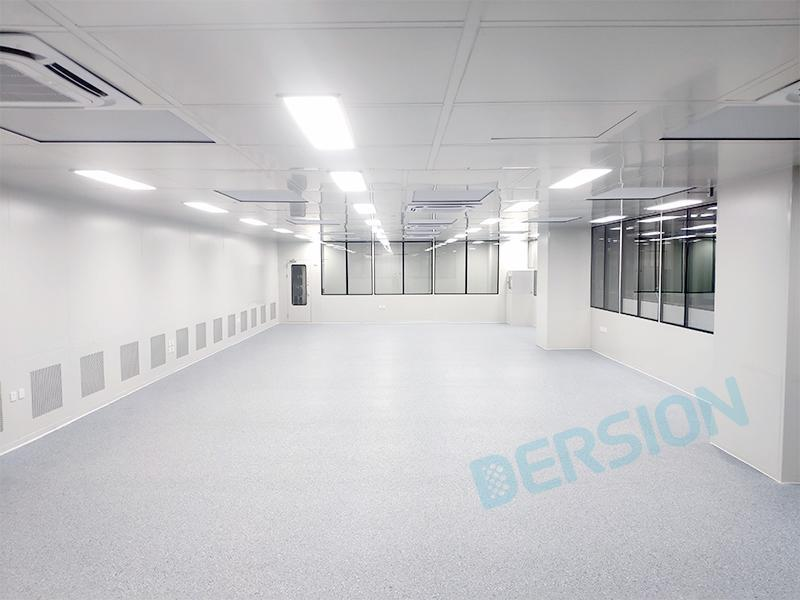
First, from a construction and materials perspective, higher room density means more partitions, doors, windows, and sealing systems. In modular cleanrooms, each additional room requires precision-engineered wall panels, airtight doors, and junction detailing to maintain compliance with ISO standards. This directly increases both material consumption and labor costs.
Second, HVAC system complexity increases exponentially with more rooms. In the U.S. market—especially in industries such as pharmaceuticals, biotechnology, and semiconductor manufacturing—cleanrooms must comply with strict standards like ISO 14644 and GMP guidelines. Each room may require independent airflow control, pressure differentials, and filtration systems (HEPA/ULPA).
For example:
Different rooms may need positive or negative pressure control
Air changes per hour (ACH) must be individually regulated
Cross-contamination risks must be eliminated
This leads to more ductwork, dampers, sensors, and advanced control systems—significantly driving up mechanical costs.
Third, engineering design becomes more sophisticated and costly. High-density layouts create complex airflow patterns, increasing the risk of turbulence, dead zones, or pressure instability. To mitigate this, advanced CFD (Computational Fluid Dynamics) simulations are often required during the design phase. In the U.S., this level of engineering validation is a standard expectation, especially for FDA-regulated environments.
Additionally, electrical and monitoring systems scale with room count. Each room typically requires:
Independent lighting and switches
Temperature and humidity sensors
Pressure monitoring devices
Alarm and control interfaces
While each component seems minor, the cumulative cost becomes substantial in high-density configurations.
Finally, commissioning and validation costs increase significantly. U.S. clients—particularly in regulated sectors—must perform rigorous testing, including airflow balancing, particle count validation, and pressure differential verification. More rooms mean more test points, longer validation timelines, and higher certification costs.
Conclusion
Higher room density in cleanrooms leads to increased costs due to compounded impacts across construction, HVAC systems, engineering design, controls, and validation. For U.S. clients, the key is not maximizing room count, but optimizing layout efficiency based on actual process requirements.
A well-designed cleanroom should strike a balance between operational functionality, regulatory compliance, and cost control—ensuring long-term ROI rather than unnecessary upfront expenditure.
Post time: Apr-22-2026