
For many manufacturers, the cleanroom is one of the largest hidden operating costs in the facility. HVAC systems, fresh air units, FFUs, lighting, and environmental controls run continuously — often 24/7. In industries such as medical devices, pharmaceuticals, electronics, and food processing, rising energy prices are making cleanroom operating efficiency a major purchasing concern.
The problem is not always the equipment itself. In many cases, excessive cleanroom energy consumption comes from outdated system design, over-engineered airflow, or inefficient operational strategies.
The good news: reducing cleanroom energy consumption does not mean sacrificing cleanliness or compliance. With the right engineering approach, manufacturers can significantly lower electricity costs while maintaining ISO and GMP standards.
Below are five practical cleanroom energy-saving strategies widely adopted by international manufacturers.
1. Use Zoned Cleanroom Design Instead of “One Standard for Everything”
One of the most common problems in traditional cleanrooms is applying the same cleanliness level to the entire facility.
In reality, not every production area requires ISO 5 conditions.
For example:
- Critical production zones → ISO 5 / ISO 6
- Packaging or secondary areas → ISO 7 / ISO 8
- Material transfer or gowning zones → lower classifications
By separating high-cleanliness areas from support zones, manufacturers can reduce unnecessary airflow and HVAC load.
Customer Pain Point
Many overseas factories discover they are paying premium operating costs for areas that do not require ultra-high cleanliness.
DERSION Advantage
At DERSION Cleanroom, modular zoning design helps customers optimize airflow distribution based on actual production requirements instead of overdesigning the entire facility. This reduces both initial investment and long-term electricity consumption.
2. Upgrade to Variable Frequency (VFD) Control Systems
Many older cleanrooms still operate with fixed-speed fans and pumps running at full capacity all day.
This wastes a large amount of electricity during:
- Low production periods
- Night shifts
- Partial occupancy
- Standby operation
Installing VFD (Variable Frequency Drive) systems on:
- AHU systems
- FFUs
- Water pumps
- Exhaust systems
allows the cleanroom to dynamically adjust airflow and pressure based on real-time conditions.
Typical Result
Fan energy consumption can often be reduced by more than 25%.
Customer Pain Point
International buyers are increasingly concerned about:
- Long-term operational costs
- Carbon reduction targets
- Sustainable manufacturing requirements
DERSION Advantage
DERSION integrates intelligent airflow control and energy-saving automation into modular cleanroom projects, helping clients achieve stable pressure control with lower energy consumption.
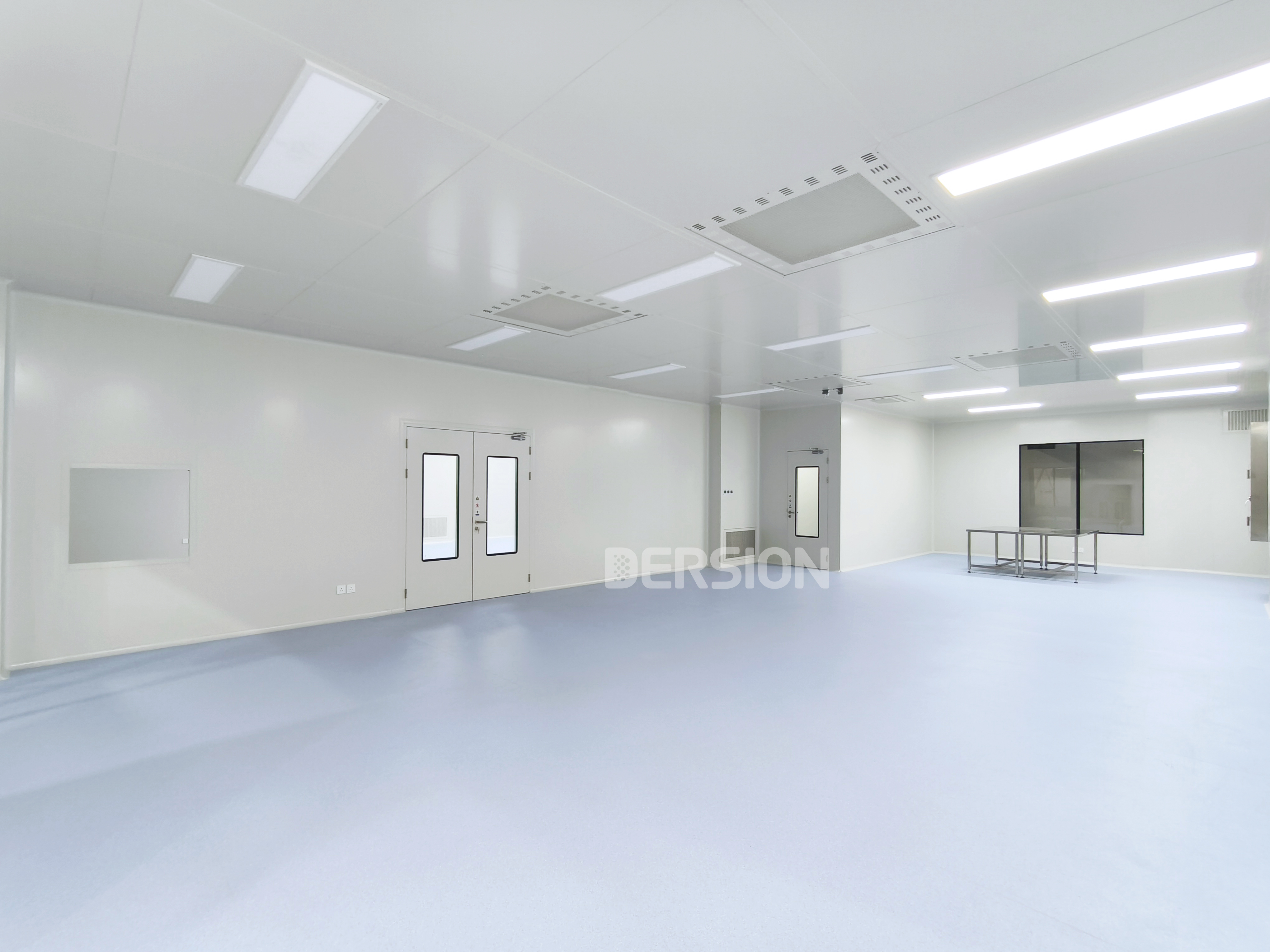
3. Optimize Air Change Rates to Avoid Over-Filtering
Many cleanrooms are simply designed with excessively high air change rates “for safety.”
However, over-ventilation dramatically increases:
- Fan power consumption
- Cooling load
- Heating demand
- Humidity control costs
The correct approach is to calculate airflow based on:
- Actual contamination risk
- Process requirements
- Occupancy levels
- Production schedules
During non-production hours, airflow can often be safely reduced while maintaining required pressure differentials.
Customer Pain Point
Overseas manufacturers often inherit conservative cleanroom designs that consume far more energy than necessary.
DERSION Advantage
DERSION engineering teams help customers balance ISO compliance and energy efficiency through customized airflow calculations and operational optimization.
4. Improve Sealing Performance and Upgrade High-Efficiency Equipment
Air leakage is a major source of hidden energy waste in cleanrooms.
Poor sealing around:
- Doors
- Windows
- Panels
- Utility penetrations
forces HVAC systems to work harder to maintain pressure stability.
At the same time, outdated equipment can dramatically increase electricity costs.
Recommended upgrades include:
- Airtight cleanroom doors and windows
- High-performance sandwich panels
- EC energy-efficient fans
- LED cleanroom lighting
- Occupancy-based lighting control
- FFU standby or sleep modes
Customer Pain Point
Many factories focus only on cleanroom classification while ignoring lifecycle operating costs.
DERSION Advantage
With over 20 years of cleanroom engineering experience, DERSION combines modular construction with energy-efficient component selection to help customers reduce long-term maintenance and operational expenses.
5. Implement Preventive Maintenance and Smart Monitoring
Dirty filters and uncontrolled system resistance are silent energy killers.
As HEPA filters become clogged:
- Air resistance increases
- Fan power rises
- System efficiency drops
A smart cleanroom should include:
- Differential pressure monitoring
- Filter replacement alerts
- Intelligent temperature and humidity control
- Real-time energy monitoring systems
When filter resistance reaches approximately 1.5 times the initial resistance, replacement should be scheduled promptly.
Customer Pain Point
Many manufacturers lack visibility into actual cleanroom energy performance until utility costs become excessive.
DERSION Advantage
DERSION provides integrated cleanroom solutions that support intelligent monitoring and easier long-term facility management, helping customers maintain stable performance while minimizing unnecessary energy waste.
Why Energy-Efficient Cleanroom Design Matters More Than Ever
For modern manufacturers, cleanroom construction is no longer only about achieving ISO classification.
Today’s international buyers care about:
- Operating cost control
- Sustainable manufacturing
- Energy efficiency
- Expandability
- Faster ROI
- Long-term facility flexibility
An energy-efficient cleanroom can:
- Reduce operational expenses
- Improve production stability
- Lower maintenance frequency
- Support ESG and sustainability goals
- Increase long-term competitiveness
About DERSION Cleanroom
DERSION Cleanroom specializes in modular cleanroom systems and turnkey cleanroom solutions for:
- Medical Device Manufacturing
- Pharmaceutical & Biotech
- Food & Cosmetics
- Electronics & Precision Manufacturing
With:
- 20 years of cleanroom experience
- 20,000㎡ smart manufacturing facility
- Professional engineering team
- ISO / CE certified production
- Modular and energy-efficient cleanroom solutions
DERSION helps global customers build cleanrooms that are cleaner, smarter, and more cost-efficient.
Post time: May-23-2026