
A well-designed cleanroom envelope should provide smooth, durable and easy-to-clean surfaces. Materials should also be compatible with the production process, cleaning chemicals, equipment loads and long-term maintenance requirements.
Why Cleanroom Surfaces Matter
Cleanroom surfaces perform several functions at the same time:
- ✔ They separate controlled and uncontrolled environments.
- ✔ They support pressure differentials between rooms.
- ✔ They prevent dust and particles from entering the clean zone.
- ✔ They provide a surface that can be cleaned and disinfected.
- ✔ They resist moisture, chemicals, impact and repeated maintenance.
- ✔ They support the long-term integrity of the cleanroom envelope.
- ✔ They influence installation time, validation activities and lifecycle cost.
For this reason, wall, ceiling and flooring specifications should be developed together with the GMP cleanroom design and compliance strategy rather than selected as isolated construction products.
1. Cleanroom Wall Panel Systems
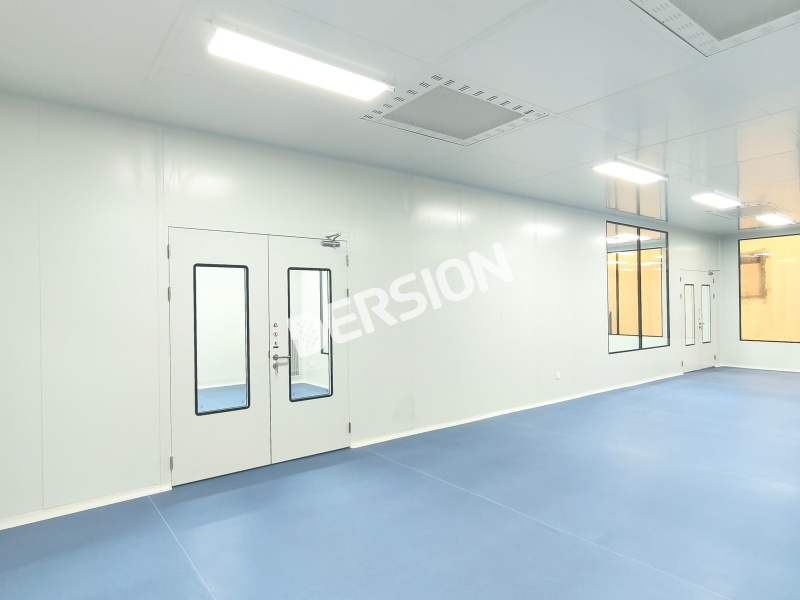
Cleanroom wall panels form the primary vertical envelope of a modular cleanroom. They are usually installed as prefabricated panels with concealed or sealed connections to create a continuous interior surface.
Common Cleanroom Wall Panel Materials
2. Cleanroom Ceiling Systems
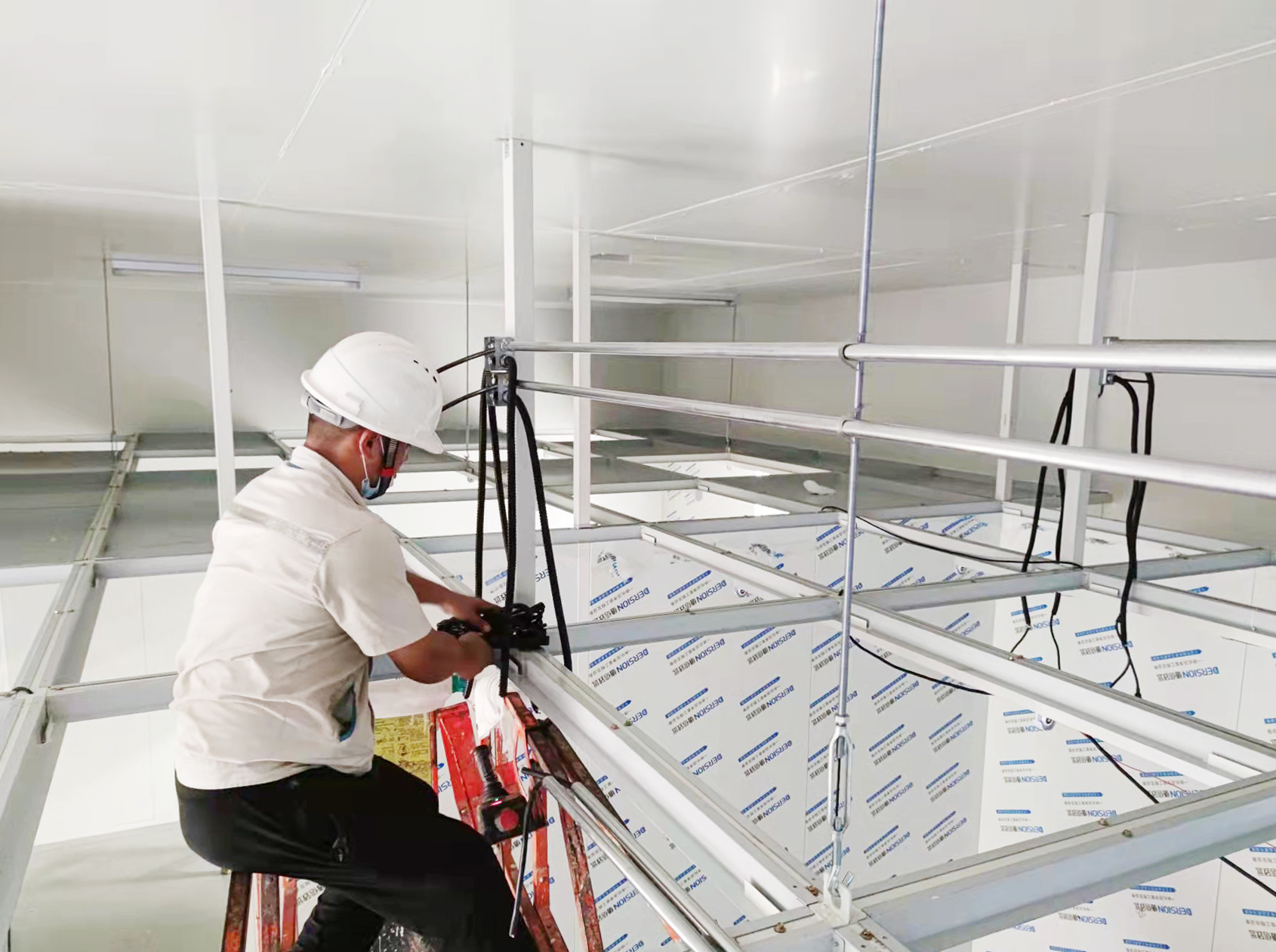
The ceiling is often overlooked during early design discussions, yet it can affect airflow distribution, maintenance access, lighting integration and contamination control.
Types of Ceiling Systems
- Continuous Flush Ceilings: Reduces ledges and gaps for superior cleanability.
- Lay-In Ceiling Systems: Provides easier access to services above the room.
- Walkable Technical Ceilings: Allows maintenance access without entering the cleanroom.
3. Cleanroom Flooring Options
Cleanroom flooring must support foot traffic, equipment loads, and the required level of surface integrity.
Key Flooring Types:
- Seamless Resin: Best for continuous cleanable surfaces.
- PVC Sheet: Flexible and chemical resistant when heat-welded.
- ESD-Control: Essential for electronics, SMT and semiconductor environments.
For electronics projects, surface selection should be coordinated with the electronics and SMT cleanroom solution so that flooring, humidity, personnel flow and equipment layout support the same risk-control objectives.

4. The Importance of Sealed Joints and Coving
In cleanroom construction, the material is only one part of the performance equation. The joints between surfaces are equally important.
5. How to Match Surface Materials to the Application
Different industries require different surface priorities: Pharmaceutical, Laboratories, Medical Device Manufacturing, and Electronics/SMT.
6. Cleanability and GMP Risk
A cleanroom surface should not only be smooth when new. It must remain cleanable after repeated use, cleaning and maintenance.
7. Material Selection and Lifecycle Cost
The lowest purchase price does not always produce the lowest total cost. A lifecycle comparison should include material price, installation labor, maintenance, and future expansion compatibility.
8. Installation Quality Is as Important as Material Choice
A high-quality panel system can fail when installation is poorly controlled. Always verify substrate flatness, structural support, and sealant continuity.
9. A Practical Selection Checklist
Use our comprehensive checklist covering Process Requirements, Cleanroom Performance, Construction Requirements, Compliance, and Lifecycle Value to make informed decisions.
Conclusion
Cleanroom wall panels, ceilings and flooring should be specified as part of an integrated facility design, not as separate finishing products. A reliable project specification should define the required performance of every surface, joint, cove, penetration and access point before procurement begins.
This specification should also connect with the cleanroom maintenance checklist before handover.
Post time: Sep-28-2026