
Why Clean Benches Are Usually Unnecessary in ISO Class 5 (Class 100) Cleanrooms
Understanding the Core Design Philosophy of ISO Class 5 Cleanrooms
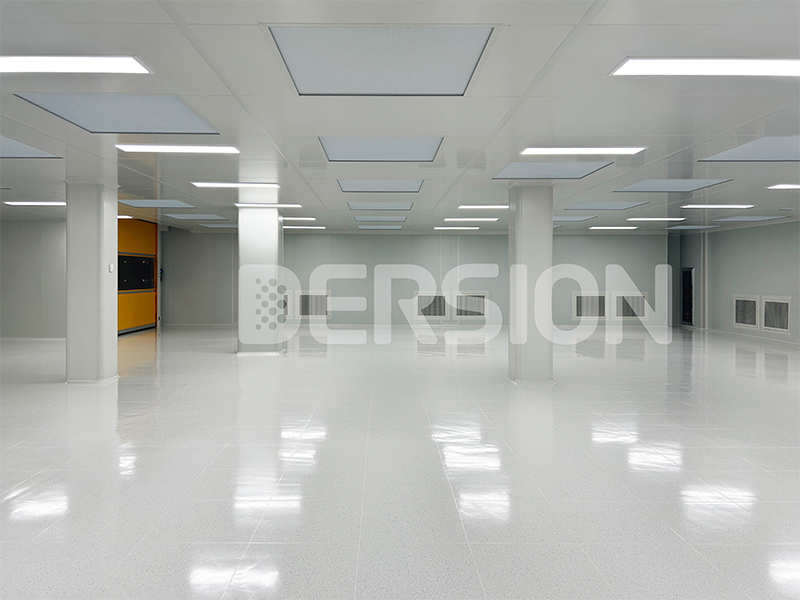
An ISO Class 5 (Class 100) cleanroom is engineered to maintain uniform, high-level cleanliness across the entire controlled space, not just at a single workstation. By definition, ISO Class 5 limits airborne particles ≥0.5 μm to no more than 3,520 particles per cubic meter.
This level of cleanliness is achieved through:
-
Unidirectional (laminar) airflow
-
Full ceiling coverage with HEPA or ULPA filters
-
High air change rates
-
Carefully engineered airflow patterns (vertical or horizontal)
Because the entire room already operates as a large laminar flow zone, the functional role of a clean bench becomes largely redundant.
1. Functional Redundancy and Airflow Interference
A clean bench is essentially a local laminar airflow device, designed to create a small ISO Class 5 zone inside a lower-grade cleanroom. However, when placed inside an ISO Class 5 cleanroom, several issues arise:
Airflow Conflict
-
ISO Class 5 cleanrooms rely on a stable, unidirectional airflow field to continuously sweep particles away.
-
A clean bench introduces its own fan-driven airflow, which can:
-
Disrupt the global airflow pattern
-
Create turbulence or dead zones
-
Reduce the efficiency of particle removal
-
Instead of improving cleanliness, the clean bench may compromise airflow integrity, especially in precision manufacturing or critical processes.
Violation of Cleanroom Design Principles
The fundamental concept of ISO Class 5 design is:
“Overall environmental control without localized airflow disturbance.”
Adding independent airflow sources runs counter to this principle.
2. Space Utilization and Operational Efficiency
In an ISO Class 5 cleanroom:
-
All qualified processes can already be performed directly on open work surfaces
-
Clean benches introduce physical barriers that:
-
Reduce usable floor area
-
Complicate material transfer
-
Limit flexibility in equipment layout
-
Restrict personnel movement
-
Modern ISO Class 5 cleanrooms rely instead on:
-
Zoning strategies
-
Pressure differentials (core areas maintained at higher positive pressure than adjacent spaces)
-
Process segregation by layout, not by equipment enclosure
This approach ensures efficiency without unnecessary structural obstacles.
3. Cost, Energy, and Maintenance Considerations
ISO Class 5 cleanrooms already require:
-
Very high air change rates
-
Extensive HEPA/ULPA filtration
-
Continuous particle monitoring
Adding clean benches results in:
-
Higher initial capital costs
-
Increased energy consumption (additional fans)
-
More frequent filter replacement
-
Additional noise and heat load
From an engineering and economic standpoint, clean benches provide no meaningful marginal benefit in an ISO Class 5 environment.
4. Special Exceptions: When Local Enclosures May Be Required
There are limited cases where additional containment is justified, such as:
-
Handling highly potent APIs
-
Working with toxic or biohazardous materials
-
Operator protection requirements
In these scenarios, a biosafety cabinet or isolator—not a clean bench—should be used, as the objective shifts from product protection to personnel and environmental safety.
Conclusion: System-Level Optimization Over Local Add-Ons
ISO Class 5 cleanrooms are designed based on a core engineering principle:
System-level cleanliness control is superior to localized purification.
Clean benches are best suited for:
-
Lower-grade cleanrooms (ISO 7–8 / Class 10,000–100,000)
-
Targeted process protection upstream of airflow
-
Transitional or retrofit environments
In a properly designed ISO Class 5 cleanroom, they are unnecessary, inefficient, and potentially disruptive.
Post time: Jan-20-2026