
Pharmaceutical Packaging Cleanroom Requirements: GMP Design Guide
Pharmaceutical packaging plays a critical role in maintaining drug safety, sterility, and regulatory compliance. Whether packaging tablets, capsules, vials, or sterile products, pharmaceutical manufacturers must operate in controlled environments designed to prevent contamination.
A pharmaceutical packaging cleanroom ensures that airborne particles, microorganisms, and environmental conditions are controlled according to international standards such as GMP and ISO 14644.
In this guide, we explain the cleanroom requirements for pharmaceutical packaging, including cleanroom classification, HVAC design, layout planning, and modular cleanroom solutions.
Why Pharmaceutical Packaging Requires Cleanrooms
Drug packaging is the final stage of pharmaceutical manufacturing. Any contamination introduced during this process can compromise product safety and regulatory compliance.
Pharmaceutical packaging cleanrooms help control:
Particle Contamination
Airborne particles such as dust and fibers can contaminate packaging materials or drug products.
Microbial Contamination
Microorganisms may compromise sterile or sensitive pharmaceutical products.
Cross-contamination
Different drug products must be packaged in separated environments to prevent cross contamination.
Environmental Stability
Temperature and humidity conditions must remain stable to protect packaging integrity.
Because of these risks, pharmaceutical regulators require controlled environments for packaging operations.
Pharmaceutical Packaging Cleanroom Standards
Several global standards define the design and operation of packaging cleanrooms.
GMP Requirements
Good Manufacturing Practice (GMP) regulations require pharmaceutical packaging environments to meet strict quality and contamination control requirements.
Key GMP considerations include:
- controlled cleanroom environments
- validated HVAC systems
- proper personnel and material flow
- documented cleaning procedures
- environmental monitoring programs
These requirements are enforced by regulatory authorities such as the FDA and EMA.
ISO 14644 Cleanroom Classification
ISO 14644 standards classify cleanrooms according to airborne particle concentration.
Typical classifications used in pharmaceutical packaging include:
| ISO Class | Typical Packaging Application |
|---|---|
| ISO 7 | Primary packaging areas |
| ISO 8 | Secondary packaging areas |
Primary packaging operations that directly contact pharmaceutical products typically require stricter cleanliness levels.
Cleanroom Design Requirements for Pharmaceutical Packaging
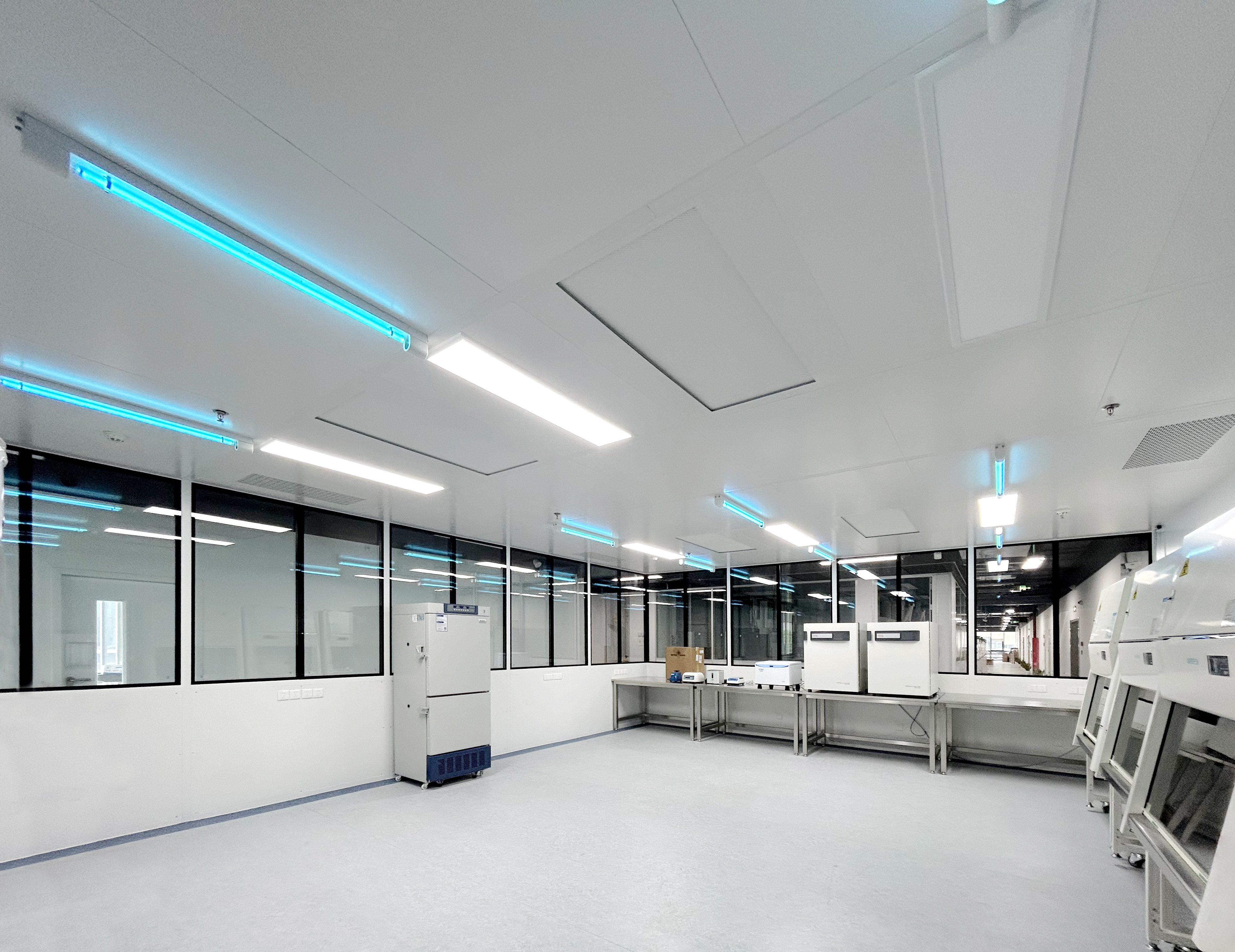
Designing a compliant pharmaceutical packaging cleanroom requires careful consideration of layout, airflow, and material handling.
Cleanroom Layout and Zoning
Cleanroom layout should minimize contamination risk and improve operational efficiency.
Typical zones include:
- gowning rooms
- material airlocks
- packaging production areas
- finished goods transfer areas
Proper zoning helps maintain pressure differentials between rooms.
Personnel and Material Flow
GMP design principles require separate flow paths for personnel and materials.
This helps prevent cross-contamination and reduces traffic inside critical areas.
Typical design features include:
- airlocks for materials
- multi-stage gowning areas
- one-way product flow
Surface Materials and Cleanroom Construction
Cleanroom materials must be easy to clean and resistant to chemical disinfectants.
Common cleanroom construction materials include:
- powder-coated steel panels
- stainless steel surfaces
- seamless epoxy flooring
- flush mounted lighting systems
These materials reduce particle generation and support GMP cleaning protocols.
HVAC Systems for Pharmaceutical Packaging Cleanrooms
HVAC systems are essential for maintaining cleanroom classification and environmental stability.
Key HVAC functions include:
- HEPA filtration
- air circulation and air changes
- temperature control
- humidity control
- pressure cascade management
A properly designed HVAC system ensures the packaging environment remains stable and compliant with GMP requirements.
For more details on cleanroom airflow engineering, see our guide on GMP Cleanroom HVAC Design.
Common Challenges in Pharmaceutical Packaging Facilities
Many pharmaceutical manufacturers face several challenges when designing packaging cleanrooms.
Regulatory Compliance
Meeting GMP and international standards requires specialized cleanroom engineering knowledge.
Long Construction Time
Traditional cleanroom construction can take months, delaying production schedules.
High Installation Costs
On-site construction and local labor costs can significantly increase project budgets.
Facility Expansion Limitations
Future production expansion can be difficult with traditional fixed cleanroom structures.
Modular Cleanroom Solutions for Pharmaceutical Packaging
Modular cleanrooms are becoming increasingly popular in pharmaceutical manufacturing because they offer faster and more flexible solutions.
Key advantages include:
Faster Installation
Prefabricated cleanroom panels allow faster construction compared to traditional building methods.
Lower Construction Cost
Factory-manufactured modules reduce on-site labor and installation time.
Flexible Expansion
Modular cleanrooms can be expanded or modified when production requirements change.
Consistent Manufacturing Quality
Factory-controlled production ensures higher consistency and quality.
Pharmaceutical Packaging Cleanroom Solutions by DERSION
DERSION provides modular cleanroom solutions designed specifically for regulated industries including pharmaceuticals, medical devices, laboratories, and electronics manufacturing.
With over 20 years of cleanroom manufacturing experience, DERSION offers:
- GMP-compliant cleanroom design
- integrated HVAC engineering
- modular cleanroom structures
- global installation support
- turnkey cleanroom project delivery
Our modular cleanrooms help pharmaceutical manufacturers quickly build compliant packaging environments while reducing construction time and costs.
Conclusion
Pharmaceutical packaging cleanrooms play a vital role in ensuring drug safety, product quality, and regulatory compliance. Proper cleanroom design must integrate GMP requirements, ISO cleanroom classification, airflow engineering, and controlled production environments.
Modern modular cleanroom solutions offer pharmaceutical companies faster and more flexible ways to build compliant packaging facilities while controlling costs and project timelines.
By partnering with experienced cleanroom manufacturers like DERSION, pharmaceutical companies can create reliable packaging environments that support long-term production success.
Post time: Mar-26-2026