
ISO vs GMP in Pharmaceutical Cleanrooms
In pharmaceutical manufacturing, maintaining a controlled environment is essential to ensure product safety, sterility, and regulatory compliance. Cleanrooms are designed to control airborne particles, microbial contamination, temperature, humidity, and airflow.
Two major standards govern pharmaceutical cleanrooms worldwide: ISO cleanroom standards and GMP cleanroom regulations. Although they are closely related, they serve different purposes in pharmaceutical production.
Understanding the differences between these standards is critical for pharmaceutical companies planning a new facility, upgrading an existing cleanroom, or ensuring regulatory compliance.
What is an ISO Cleanroom Standard?
ISO cleanroom standards are defined by the international standard International Organization for Standardization under ISO 14644 Cleanroom Standard.
ISO 14644 focuses primarily on airborne particle concentration and provides a classification system for cleanroom environments.
ISO Cleanroom Classification
The standard defines cleanrooms from ISO Class 1 to ISO Class 9, based on the maximum number of particles per cubic meter.
| ISO Class | Maximum Particles ≥0.5µm/m³ | Typical Application |
|---|---|---|
| ISO 5 | 3,520 | Aseptic filling |
| ISO 6 | 35,200 | Sterile packaging |
| ISO 7 | 352,000 | Pharmaceutical production |
| ISO 8 | 3,520,000 | Medical device assembly |
In pharmaceutical production, the most common ISO classes are ISO 5, ISO 7, and ISO 8.
ISO standards mainly address:
- Airborne particle limits
- Cleanroom testing methods
- Monitoring procedures
- Airflow and filtration performance
However, ISO standards do not regulate pharmaceutical production processes or product safety requirements.
What is GMP Cleanroom Standard?
GMP stands for Good Manufacturing Practice, a regulatory framework used to ensure pharmaceutical products are consistently produced and controlled according to quality standards.
Global pharmaceutical GMP regulations are issued by organizations such as:
- U.S. Food and Drug Administration
- European Medicines Agency
- World Health Organization
Unlike ISO standards, GMP covers the entire pharmaceutical manufacturing process, including:
- Cleanroom design
- Personnel flow
- Material transfer
- Environmental monitoring
- Documentation and validation
- Quality management systems
GMP Cleanroom Grades
Pharmaceutical cleanrooms are categorized into Grades A–D.
| GMP Grade | Typical ISO Equivalent | Application |
|---|---|---|
| Grade A | ISO 5 | Critical aseptic operations |
| Grade B | ISO 5–7 | Background for aseptic filling |
| Grade C | ISO 7 | Preparation of sterile products |
| Grade D | ISO 8 | Less critical production areas |
This shows that GMP uses ISO particle classifications as a foundation, but adds additional operational and regulatory requirements.
ISO vs GMP Cleanroom: Key Differences
| Feature | ISO Standard | GMP Standard |
|---|---|---|
| Focus | Particle control | Product safety & manufacturing quality |
| Standard | ISO 14644 | Pharmaceutical regulations |
| Classification | ISO 1–9 | Grade A–D |
| Coverage | Cleanroom environment | Entire manufacturing process |
| Regulatory enforcement | Technical standard | Legally required for pharma |
In short:
ISO defines how clean the air must be.
GMP defines how the pharmaceutical production must be managed.
Why Pharmaceutical Companies Must Comply with Both
Pharmaceutical facilities must comply with both ISO and GMP requirements to ensure regulatory approval and product quality.
Typical pharmaceutical cleanroom design includes:
- ISO-classified cleanroom environments
- GMP-compliant layout and material flow
- Controlled personnel entry systems
- Cleanroom HVAC systems with HEPA filtration
- Environmental monitoring systems
Failure to meet these standards can result in:
- Regulatory penalties
- Product recalls
- Delayed market approval
- Increased contamination risk
Common Challenges in Pharmaceutical Cleanroom Projects
Pharmaceutical manufacturers often face several challenges when planning or upgrading cleanrooms.
1. Regulatory Compliance Complexity
Understanding the requirements of ISO standards and GMP regulations can be complicated, especially for new pharmaceutical facilities.
2. Inefficient Cleanroom Layout
Poor design may cause cross-contamination risks between personnel, materials, and products.
3. High Construction and Installation Costs
Traditional cleanroom construction can take months and require significant labor costs.
4. HVAC System Performance Issues
Improper airflow design can lead to unstable pressure differentials, temperature fluctuations, and contamination risks.
How DERSION Provides GMP-Compliant Pharmaceutical Cleanroom Solutions
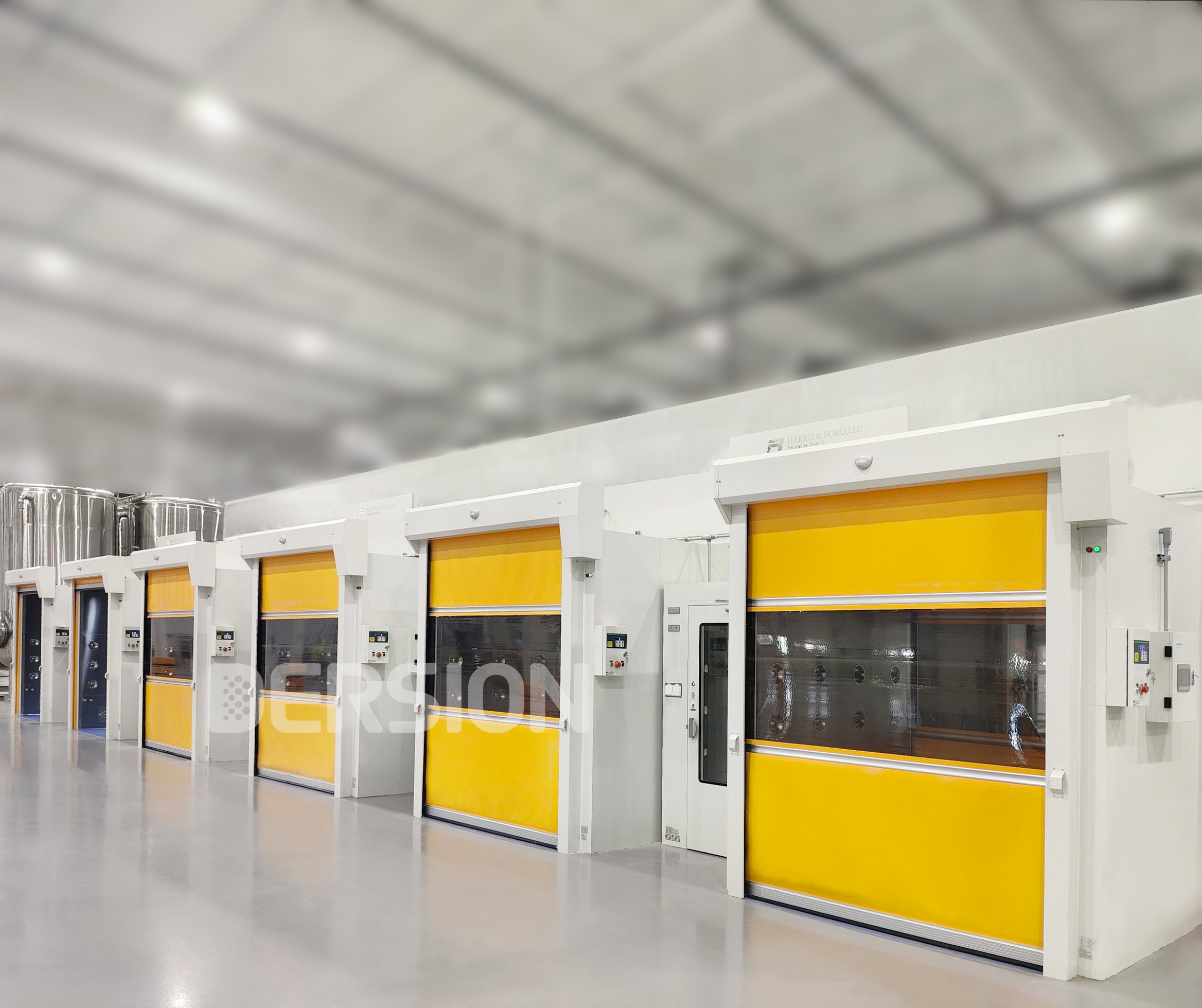
As a professional cleanroom manufacturer with over 20 years of experience, DERSION Cleanroom Engineering provides integrated pharmaceutical cleanroom solutions designed to meet both ISO and GMP requirements.
Modular Cleanroom Design
DERSION adopts modular cleanroom systems that allow fast installation and flexible expansion.
Advantages include:
- Reduced construction time
- Factory prefabrication for higher quality
- Lower labor costs for overseas projects
- Easy relocation and expansion
Advanced HVAC Cleanroom Systems
The HVAC system is the core of pharmaceutical cleanroom performance. DERSION provides optimized HVAC design including:
- HEPA / ULPA filtration
- laminar airflow systems
- pressure cascade control
- temperature and humidity regulation
These systems ensure compliance with ISO 14644 particle limits and GMP airflow requirements.
Turnkey Cleanroom Solutions
DERSION offers complete cleanroom turnkey services, including:
- Cleanroom layout design
- HVAC engineering
- Equipment integration
- Installation guidance
- Validation support
This one-stop solution helps pharmaceutical companies reduce project risks and accelerate facility deployment.
Best Practices for Designing Pharmaceutical Cleanrooms
To ensure compliance and operational efficiency, pharmaceutical cleanroom projects should follow several best practices.
Optimize Personnel and Material Flow
Separate pathways help reduce cross contamination.
Implement Pressure Cascade Design
Pressure differentials prevent contaminated air from entering critical areas.
Use Modular Construction
Prefabricated cleanrooms shorten construction schedules and improve consistency.
Choose an Experienced Cleanroom Partner
Working with a professional cleanroom manufacturer ensures compliance with both ISO and GMP requirements.
Conclusion
Both ISO and GMP standards are essential in pharmaceutical cleanroom design and operation. ISO standards focus on airborne particle control, while GMP regulations ensure the entire manufacturing process meets strict quality requirements.
Pharmaceutical manufacturers must integrate both standards to achieve regulatory compliance, maintain product sterility, and ensure patient safety.
With advanced modular technology, professional HVAC engineering, and turnkey project experience, DERSION provides reliable cleanroom solutions for pharmaceutical production facilities worldwide.
Recommended internal links:
- Pharmaceutical Cleanroom Solutions
- Modular Cleanroom Systems
- Cleanroom HVAC System Design
- Medical Device Cleanroom
Recommended authority references:
- ISO 14644 Cleanroom Standard official documentation
- U.S. Food and Drug Administration GMP guidelines
- World Health Organization pharmaceutical cleanroom recommendations
- European Medicines Agency GMP regulatory framework
Post time: Mar-26-2026