
DERSION | GLOBAL BUYER’S GUIDE
12 Key Factors for Choosing a Reliable Cleanroom Manufacturing Partner
Engineering · Manufacturing · Compliance · Global Delivery
Choosing the right modular cleanroom manufacturer is one of the most important decisions when planning a contamination-controlled facility. Your choice influences product quality, production efficiency, regulatory readiness, operating costs and the ability to expand in the future.
Not all suppliers provide the same engineering expertise, manufacturing quality or installation support. Some sell architectural components, while others coordinate complete cleanroom systems with HVAC, HEPA filtration, controls and equipment. Whether you are planning an ISO Class 7 medical device cleanroom, a GMP pharmaceutical facility or a biotechnology laboratory, this guide explains how to evaluate suppliers, compare quotations and reduce procurement risks.
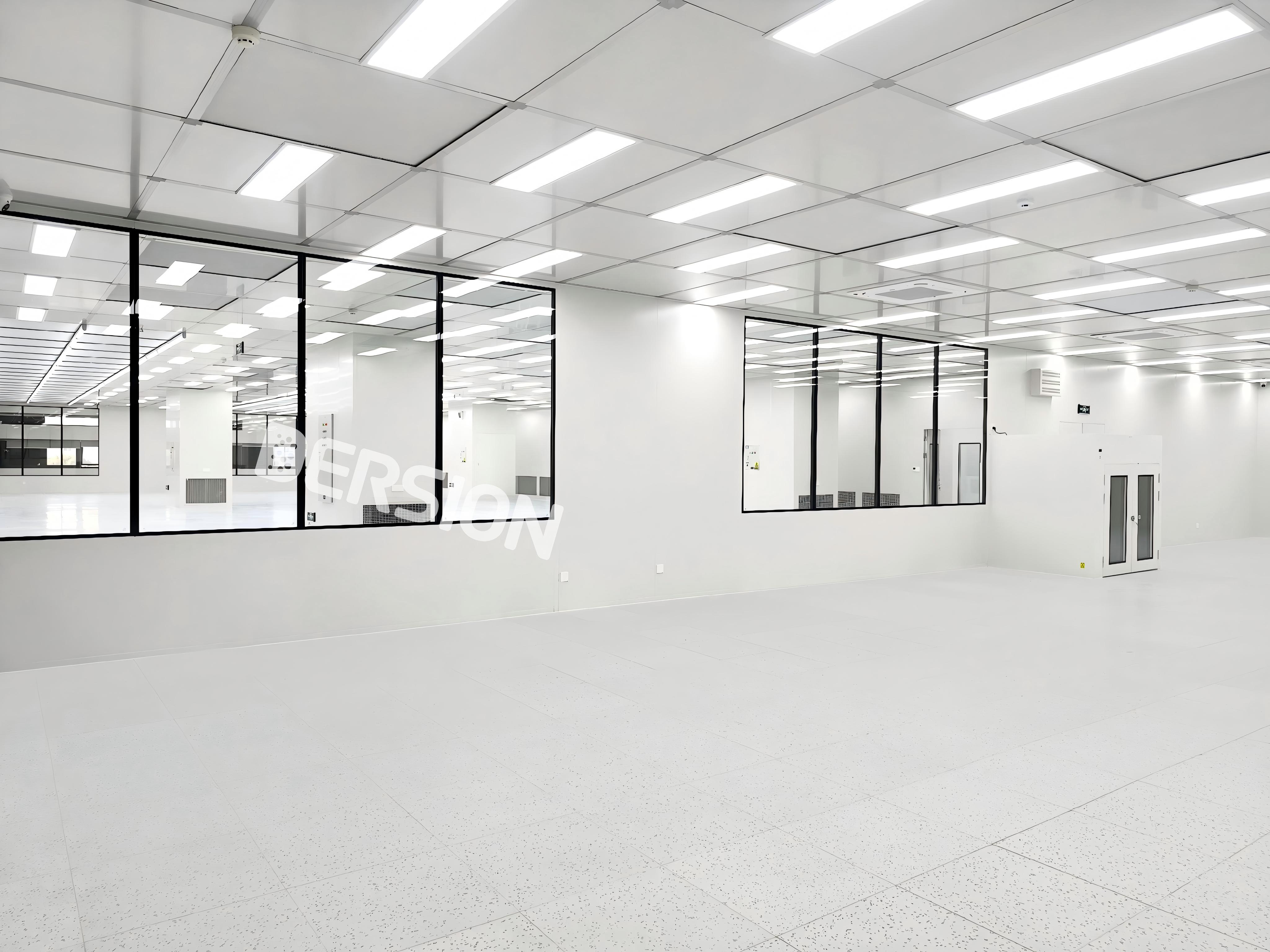
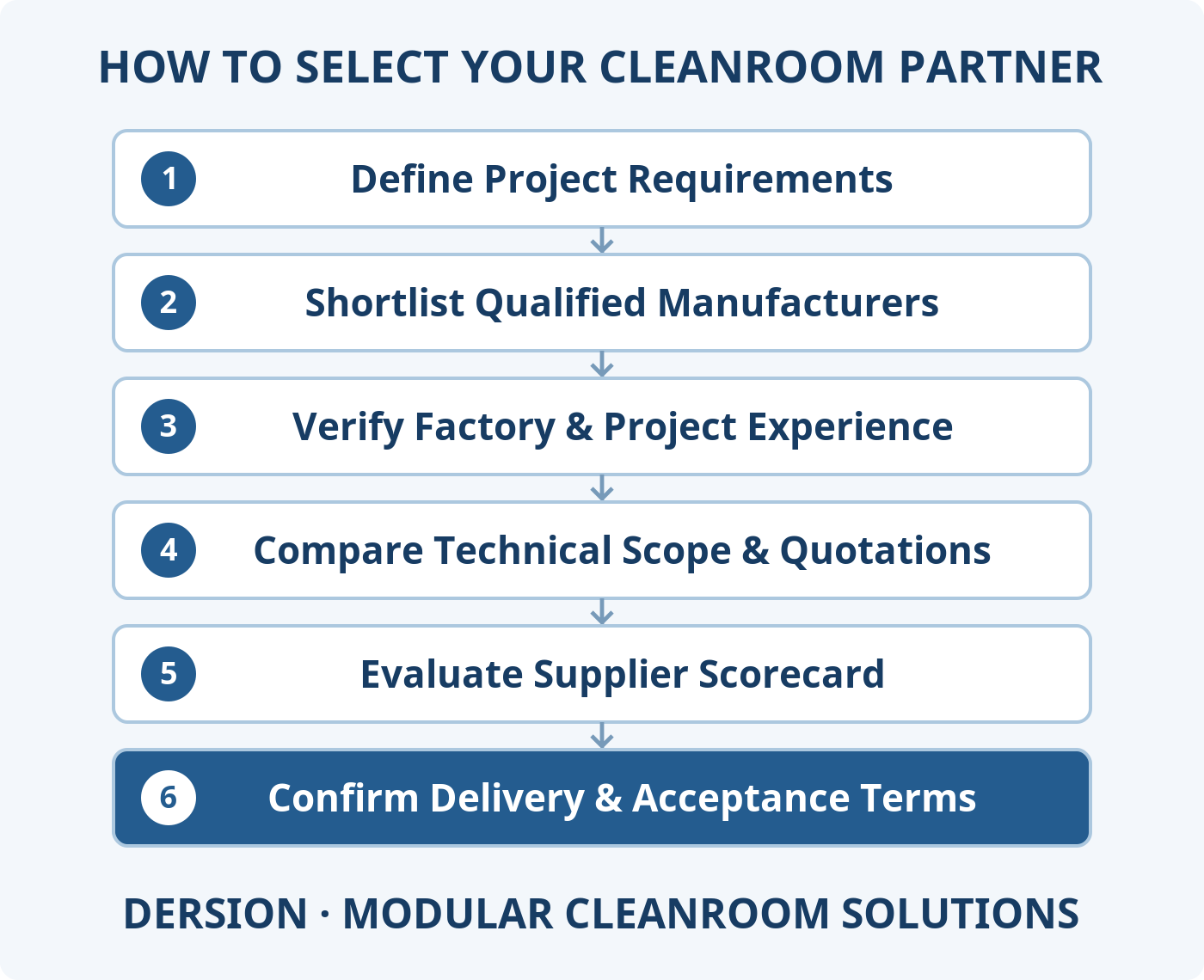
Quick Answer: How Do You Choose a Modular Cleanroom Manufacturer?
To choose a reliable modular cleanroom manufacturer, evaluate relevant project experience, engineering design, compliance support, in-house manufacturing, material quality, HVAC integration, testing, installation and total cost of ownership. Request verifiable factory evidence, technical documentation, comparable quotations and clear acceptance responsibilities before ordering.
The best supplier is not necessarily the cheapest or largest company. It is the partner that can meet the specific process requirements and provide credible delivery and lifecycle support.
| Evaluation area | Evidence to request |
|---|---|
| Industry experience | Comparable completed projects |
| Compliance | Applicable standards, certificates and test plan |
| Engineering | Layout, design basis and equipment schedule |
| Manufacturing | Factory audit and quality inspection records |
| System integration | HVAC, filtration and control specifications |
| Delivery | Milestone schedule and installation scope |
| Long-term value | Lifecycle cost, warranty and expansion options |
What Is a Modular Cleanroom Manufacturer?
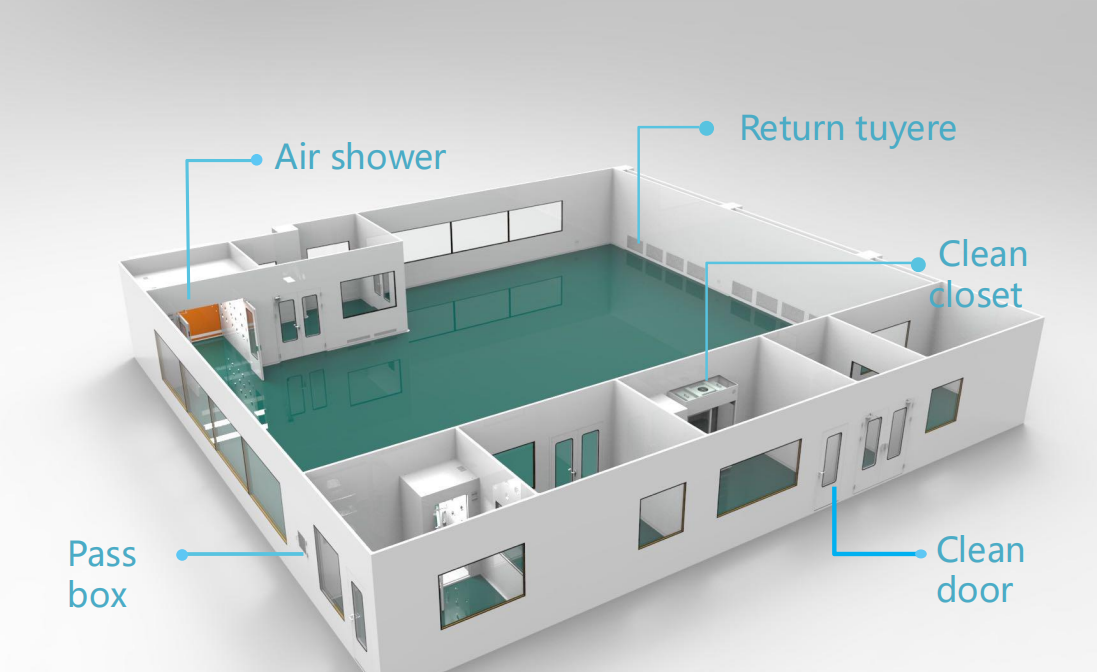
A modular cleanroom manufacturer engineers and produces prefabricated components that are assembled on-site into an environment with specified particle cleanliness and environmental conditions. A complete system may combine wall and ceiling panels, doors, windows, flooring, HVAC, FFUs, HEPA filters, lighting, controls, air showers and pass-through boxes.
Cleanroom Manufacturer vs. Supplier vs. Contractor
| Company type | Typical scope | Best suited for |
|---|---|---|
| Component supplier | Individual equipment or materials | Replacement and component procurement |
| Cleanroom manufacturer | Prefabricated structures and related systems | New modular facilities |
| Cleanroom contractor | Local construction and installation coordination | Site-intensive projects |
| Integrated solutions provider | Design, manufacture, system integration and installation support | Customized cleanroom projects |
For international buyers, an integrated supplier can simplify coordination between equipment and engineering teams. Always verify what is manufactured directly and what is sourced externally. Explore DERSION modular cleanroom manufacturing solutions.
What Should You Know Before Choosing a Cleanroom Manufacturer?
Prepare a preliminary User Requirement Specification (URS) so every shortlisted supplier works from the same design assumptions. A clear brief prevents misleading price comparisons and unnecessary redesign.
Required ISO Cleanroom Classification
ISO 14644-1 defines airborne particle cleanliness classifications. Specify the required classification, applicable particle sizes and occupancy state for acceptance testing.
| ISO class | Maximum particles ≥ 0.5 µm/m³ | Illustrative applications |
|---|---|---|
| ISO 5 | 3,520 | Critical processing zones |
| ISO 6 | 35,200 | Optics and precision manufacturing |
| ISO 7 | 352,000 | Medical devices, biotechnology and laboratories |
| ISO 8 | 3,520,000 | Controlled assembly and packaging |
Applications are examples only. Classification must be determined from the actual process and contamination risk.
Industry, Layout and Environmental Requirements
Identify applicable regulatory requirements, production workflow, equipment footprint, operator count, material and personnel movement, ceiling height and maintenance access. Specify temperature, humidity, pressure relationships, fresh air, exhaust and heat loads when relevant. Two rooms with the same ISO class and area can require very different HVAC configurations.
Budget, Timeline and Delivery Location
Provide the expected production start date, budget range, installation country, site readiness and future expansion plans. International projects also require coordination of shipping, customs, unloading, utilities, installation labor and testing arrangements. Identify which services will be handled by your local team.
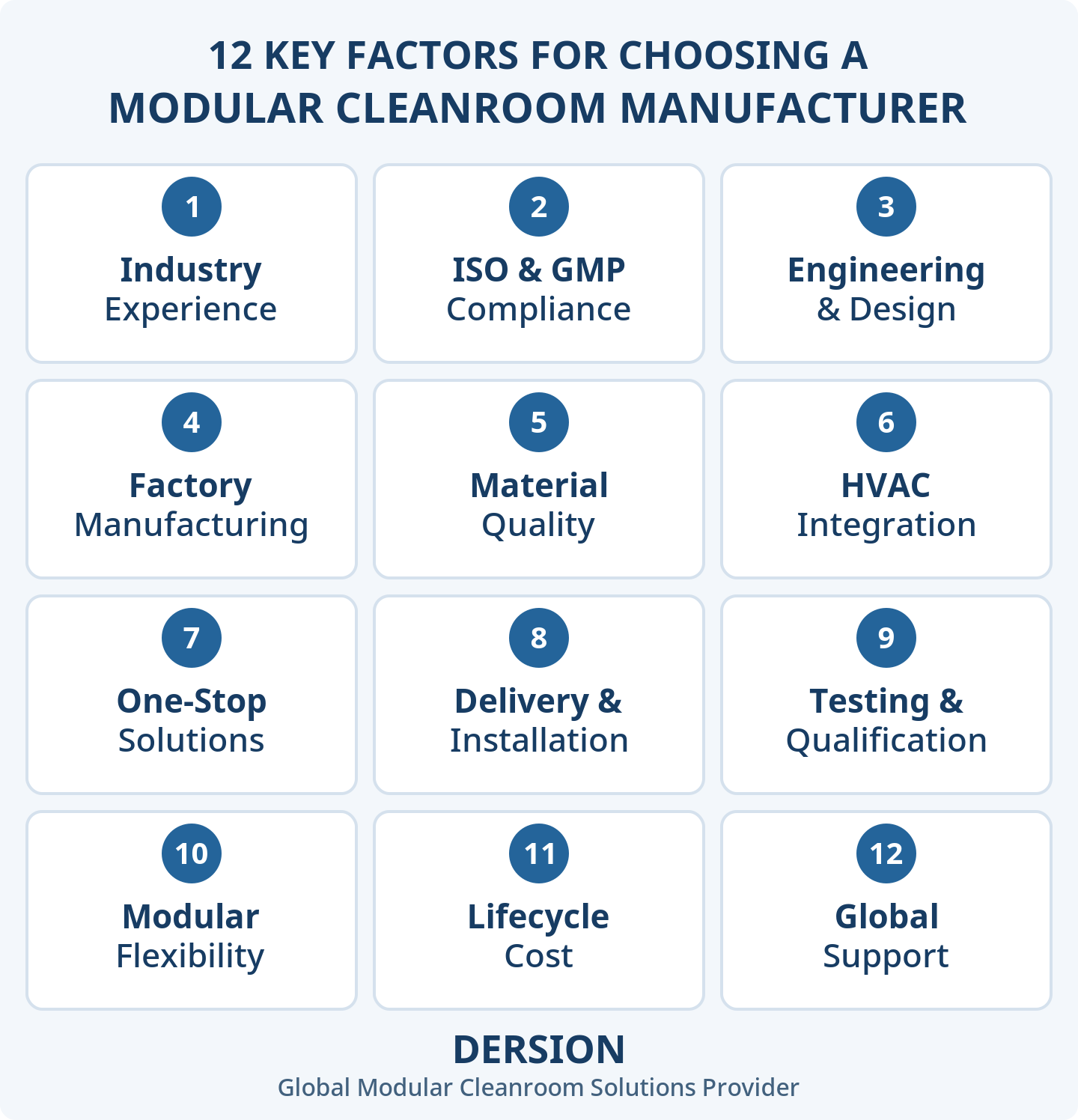
12 Key Factors to Consider When Choosing a Modular Cleanroom Manufacturer
1. Industry Experience and Relevant Cleanroom Projects
Review projects with similar production processes, regulatory requirements, environmental conditions and size. A supplier experienced in cosmetics packaging may not have the same expertise required for sterile pharmaceutical production or sensitive biotechnology applications.
| Industry | Key considerations |
|---|---|
| Medical devices | Particle control, clean assembly and packaging |
| Pharma and biotechnology | Contamination control, documentation and process-specific requirements |
| Laboratories | Flexible layouts, filtration and equipment integration |
| Cosmetics and food | Cleanability, hygiene zoning and workflow |
| Optics and advanced materials | Environmental stability and particle control |
Ask for a project location, year, floor area, cleanliness classification and scope of delivery. Photos alone do not establish performance. Review the supplier’s experience with medical device cleanroom solutions or other relevant applications.
2. ISO, GMP and Regulatory Compliance Capabilities
A qualified manufacturer should explain how the proposed design supports applicable requirements. Distinguish quality management certification, installed cleanroom performance and regulatory compliance of the customer’s operations. An ISO 9001 certificate does not establish ISO Class 7 performance, and an ISO-classified room is not automatically GMP compliant.
| Standard or framework | Purpose |
|---|---|
| ISO 14644-1 / -2 / -3 | Classification, monitoring and testing |
| ISO 9001 | Quality management systems |
| ISO 13485 | Medical device quality management systems |
| EU GMP Annex 1 | Sterile medicinal product manufacturing |
| FDA cGMP | Applicable US manufacturing requirements |
| USP <797> / <800> | Sterile compounding / hazardous drug handling |
| ISO 22716 | Cosmetics good manufacturing practices |
Consult official EU GMP guidelines, FDA manufacturing guidance and USP compounding resources where applicable. Verify certification scope, expiration dates and the agreed test conditions.
3. Cleanroom Engineering and Custom Design Capabilities
A cleanroom should be designed around the manufacturing process rather than a standard catalogue configuration. A capable engineering team considers equipment layout, personnel and material flow, cleanliness zoning, pressure relationships, heat loads, supply and return air paths, maintenance access and future expansion.
Three-dimensional engineering drawings can identify integration conflicts before production begins. For medical device assembly, separate preparation, assembly, inspection and packaging areas may be needed. Biotechnology laboratories may require a different layout based on research equipment and contamination risks.
4. In-House Manufacturing and Factory Quality Control
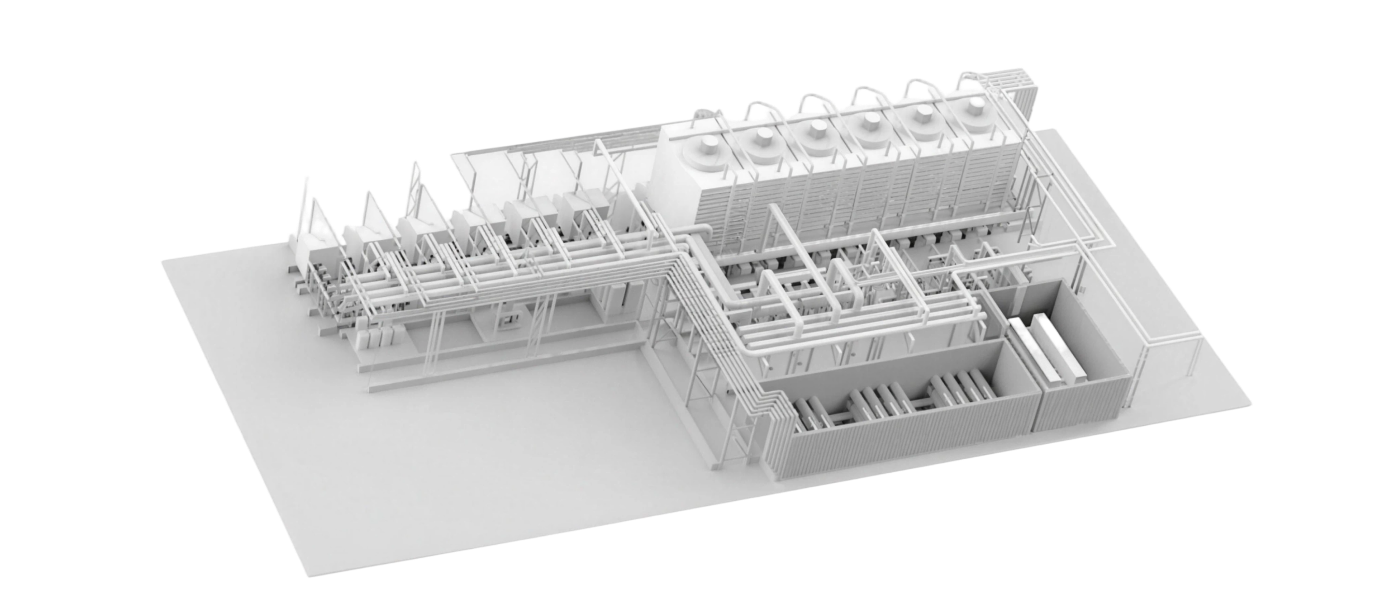
Direct factory manufacturing can improve visibility into production schedules, component quality and engineering changes. Inspect sheet-metal fabrication, incoming material checks, dimensional tolerances, assembly procedures, final inspection and export packaging. Inconsistent components can result in poor sealing, installation conflicts and additional site modification costs.
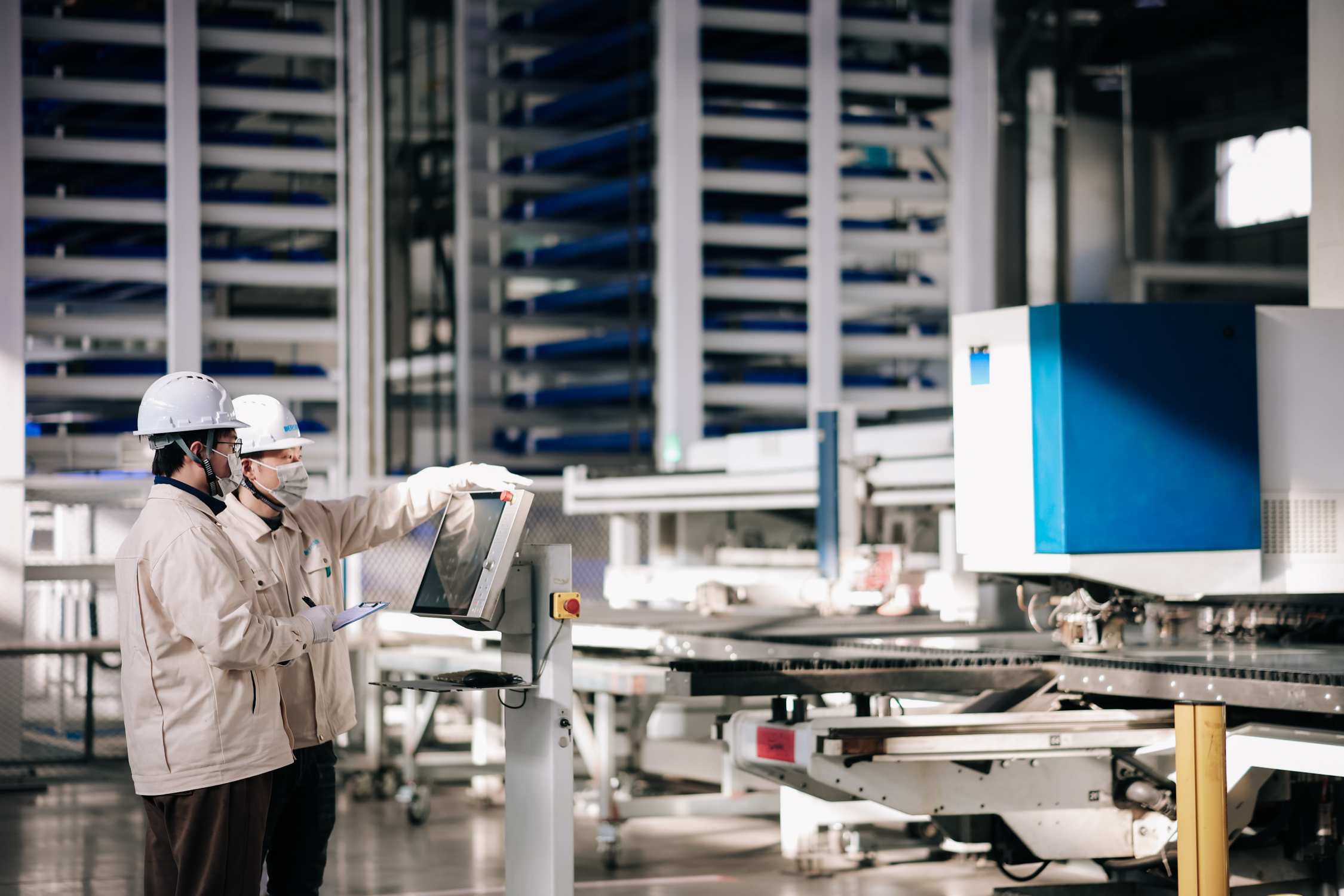
DERSION uses German TRUMPF sheet metal processing equipment and a dedicated controlled assembly workshop to support modular cleanroom manufacturing. Learn more about DERSION manufacturing capabilities.
5. Modular Cleanroom Materials and System Quality
Select materials according to the intended production environment. Review panel surface smoothness, cleaning-agent compatibility, ceiling load capacity, door sealing, flush glazing, flooring durability and the design of joints. For regulated environments, difficult-to-clean surfaces and unnecessary ledges can increase contamination risks.
A modular system should also allow practical maintenance and component replacement. Confirm applicable structural and fire-performance documentation for the intended installation location.
6. Integrated HVAC, HEPA Filtration and Environmental Control
A cleanroom is more than an enclosure. HVAC and filtration must work with the enclosure to achieve the specified particle cleanliness and environmental conditions. An experienced manufacturer considers supply and return air, fresh air and exhaust, HEPA filtration, FFUs, differential pressure, temperature, humidity and intelligent controls.
A facility in Saudi Arabia may require different cooling and fresh-air treatment from a similar facility in Northern Europe. A fixed FFU quantity or air-change rate cannot guarantee a particular ISO class. The design must account for occupancy, process emissions, heat loads and outdoor climate.
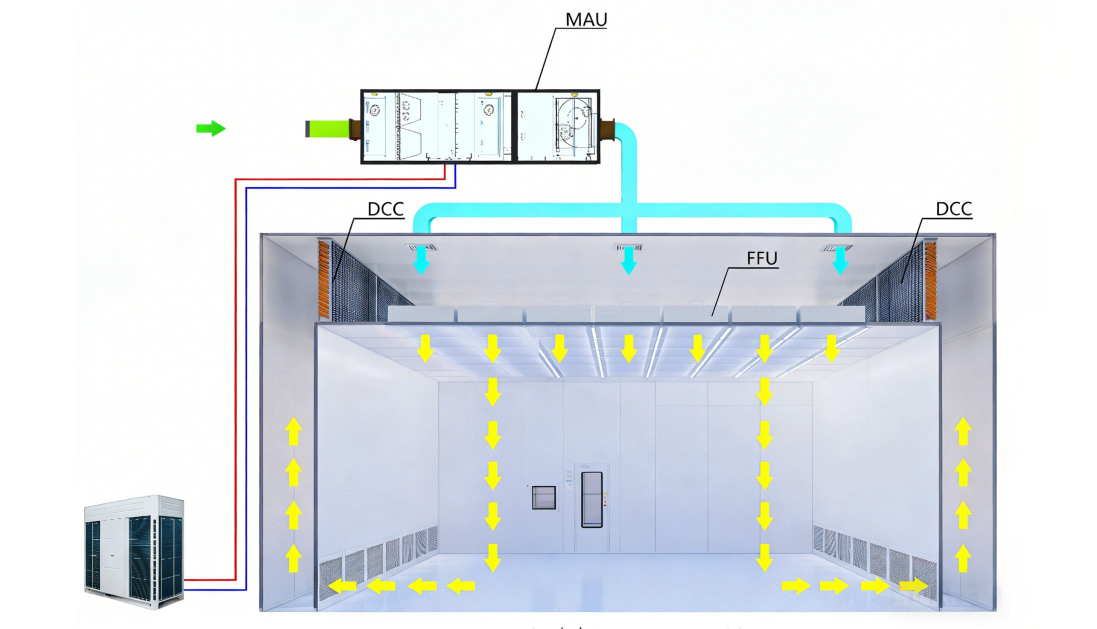
7. One-Stop Cleanroom Solutions and Equipment Integration
When panels, HVAC, controls and accessories come from separate suppliers, inconsistent specifications can lead to site conflicts, extra costs and unclear responsibilities. An integrated cleanroom solutions provider coordinates these systems within a common engineering design.
Depending on the scope, supporting equipment can include air showers, pass-through boxes, FFUs, laminar airflow workstations and cleanroom furniture. Local civil works, building modifications, fire protection, permits and external utilities should be clearly assigned to the relevant local parties.
8. Manufacturing Lead Time and Installation Efficiency
Factory prefabrication can reduce site fabrication and allow production to proceed while the installation location is being prepared. However, total delivery time depends on design approval, equipment availability, manufacturing capacity, transport, site readiness, installation labor and testing.
A four-week manufacturing schedule, for example, is not the same as a four-week project delivery schedule. A reliable supplier should provide realistic milestones and identify dependencies that could delay handover.
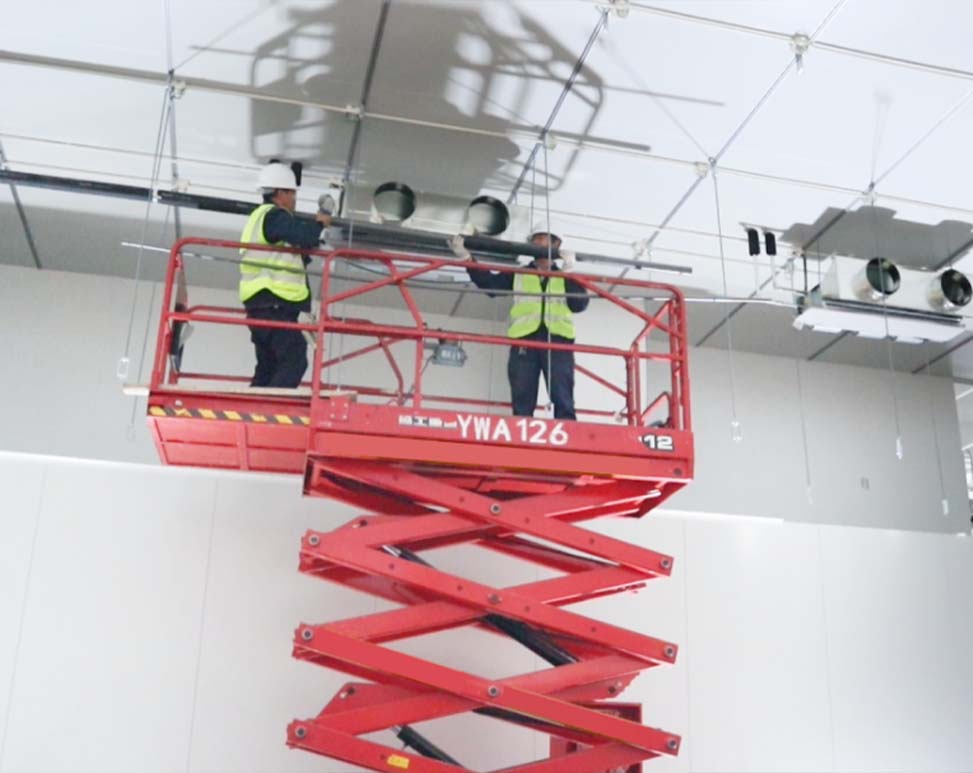
9. Cleanroom Testing, Commissioning and Qualification Support
Installation completion does not demonstrate cleanroom performance. Testing and commissioning are needed to show that the installed system meets the agreed requirements. ISO 14644-3 describes cleanroom test methods.
| Test | Purpose |
|---|---|
| Airborne particle counting | Verify specified classification |
| Installed filter leakage test | Identify filtration system leakage |
| Airflow measurement | Verify supply and distribution |
| Differential pressure | Check pressure relationships |
| Temperature and humidity | Verify environmental conditions |
| Airflow visualization / recovery | Assess performance where required |
Regulated projects may require DQ, IQ, OQ or PQ documentation, as-built drawings, calibration records and operating manuals. Some activities may be performed by a qualified third party or the customer’s validation team. Agree who performs each test, under what conditions and with what acceptance criteria.
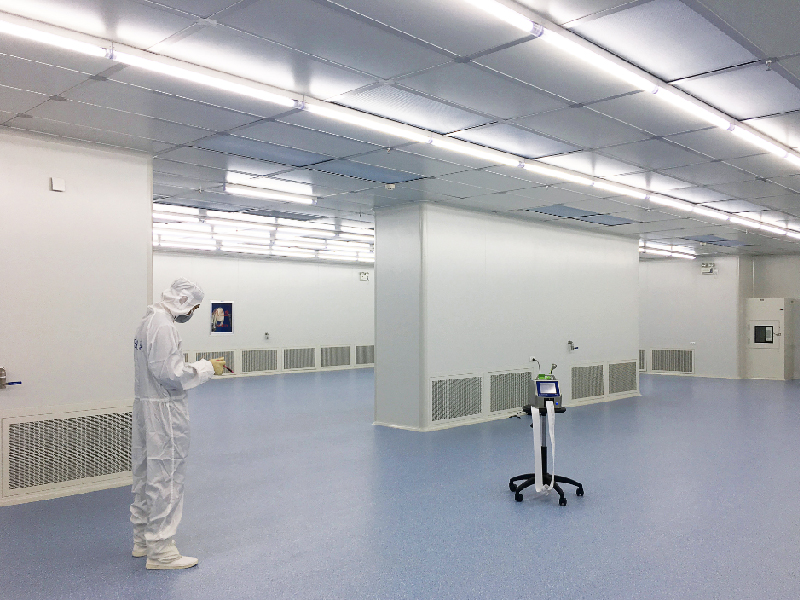
10. Modular Flexibility, Scalability and Relocation
Businesses may introduce new products, expand production lines or move to a different building. Removable panels, reconfigurable layouts and replaceable components can help preserve existing infrastructure. Confirm that future expansion can be supported by the structural system and HVAC capacity.
DERSION’s modular design targets up to 98% material reusability under suitable project conditions. Actual reuse depends on component condition, system configuration, the new site and project-specific requirements. Relocated or modified cleanrooms may require additional engineering and testing.
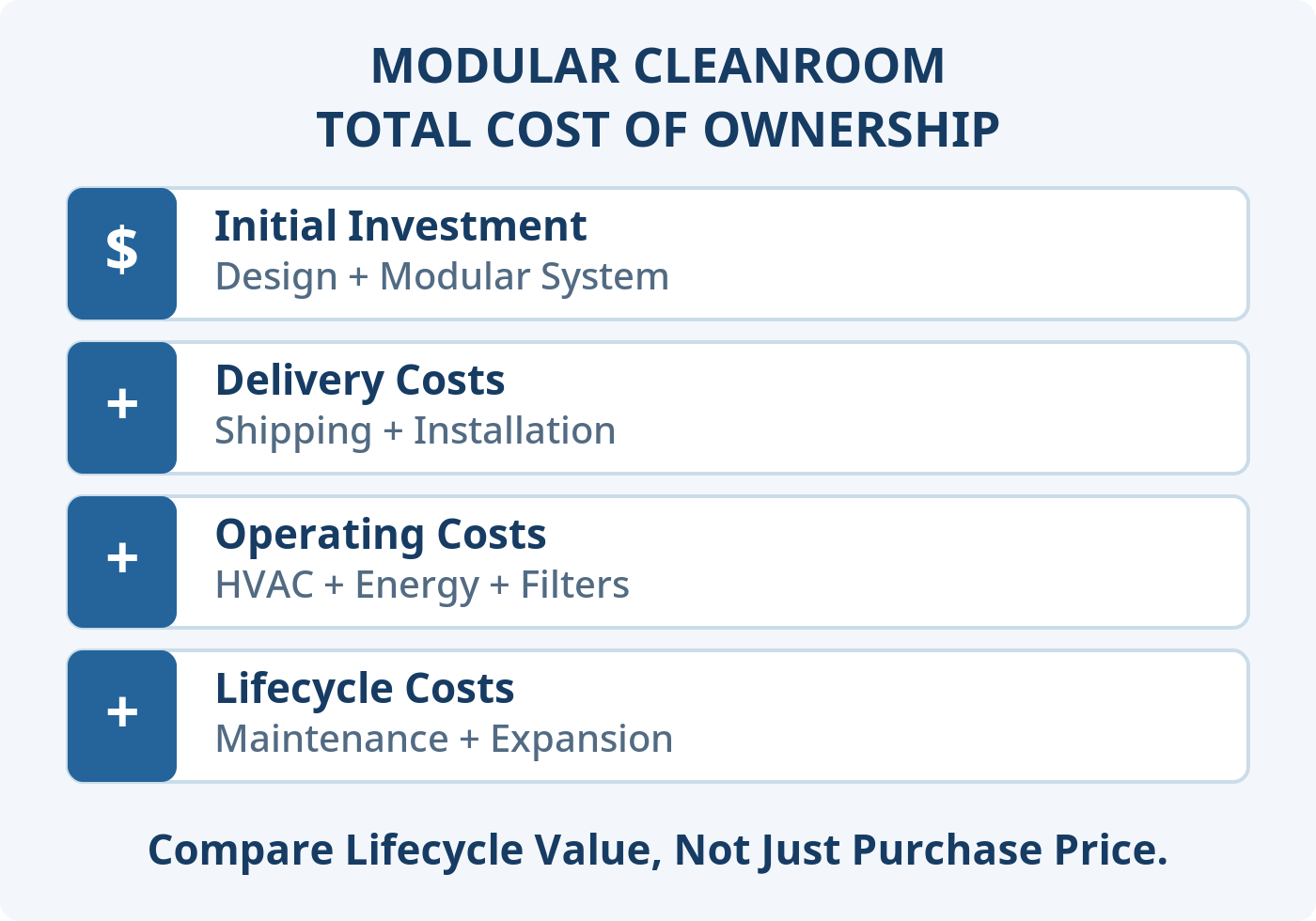
11. Total Cost of Ownership and Energy Efficiency
The lowest purchase price may not deliver the lowest lifecycle cost. Compare suppliers using an agreed operating period, environmental requirements and scope of supply.
| Cost category | What to compare |
|---|---|
| Initial investment | Engineering, structure and equipment |
| Delivery | Freight, insurance, duties and site labor |
| Commissioning | Testing, balancing and qualification |
| Energy | HVAC, ventilation, filtration and lighting |
| Maintenance | Filters, repairs, labor and downtime |
| Future expansion | Additional rooms and system upgrades |
Energy-efficient fans, optimized HVAC sizing and appropriate controls can reduce unnecessary operating costs without compromising contamination control. See our cleanroom construction cost guide for the major factors affecting project budgets.
12. Global Installation Support, Warranty and After-Sales Service
For international projects, confirm whether the manufacturer provides assembly drawings, component labels, installation training, remote engineering support, on-site supervision, local installation resources and commissioning assistance. The service model may vary by country and project scope.
DERSION provides a three-year overseas modular cleanroom warranty subject to the agreed contract terms. Local installation resources are available in the United States, with agent support in Australia, project-based arrangements in the Middle East and remote or supervised installation support for applicable European projects.
Need Help Defining Your Cleanroom Requirements?
Send your floor plan, industry, required ISO class and project location to our engineering team.
How to Verify a Modular Cleanroom Manufacturer Before Placing an Order
Verify the Factory and Quality Control Process
Request a factory visit or live video audit. Identify the components manufactured in-house and any outsourced equipment. Outsourcing is not inherently a disadvantage if quality control and technical accountability are clearly defined. Verify that the factory has sufficient capacity for the proposed schedule.
Review Engineering and Technical Documentation
| Document | Purpose |
|---|---|
| Preliminary layout and 3D drawings | Confirm workflow and integration |
| Equipment schedule and material specifications | Verify configuration and quality |
| HVAC design basis | Assess environmental control capabilities |
| Certificates and inspection records | Verify credentials and production control |
| Project schedule and responsibility matrix | Define delivery and interfaces |
| Test and warranty terms | Clarify performance acceptance and service |
Verify Similar Project References
Request relevant references with comparable processes, ISO classification, room area and installation location. Where confidentiality permits, ask for sample test reports and customer references. A manufacturer that explains the technical constraints and how they were resolved provides stronger evidence than one showing only photographs.
How to Compare Modular Cleanroom Manufacturers and Quotations
Comparing price per square meter alone is a common procurement mistake. A panel-only quotation may appear less expensive than a complete system, but require substantial additional investment in HVAC, installation and testing.
What Should Be Included in a Modular Cleanroom Quotation?
| Scope of supply | Example supplier A | Example supplier B |
|---|---|---|
| Engineering | Basic layout | Detailed design |
| Walls, ceiling and doors | Included | Included |
| HVAC | Excluded | Included |
| FFUs and HEPA filters | Optional | Included |
| Lighting and controls | Excluded | Included |
| Flooring | Excluded | Included |
| Installation support | Excluded | Included |
| Commissioning support | Excluded | Included |
| Testing documentation | Not specified | Defined |
| Warranty | Not specified | Defined |
Illustrative comparison only; these are not actual supplier quotations.
Hidden Costs and Responsibility Boundaries
Check shipping, import duties, customs clearance, unloading, local installation labor, ductwork, utility connections, testing, qualification and spare parts. Clarify agreed Incoterms, the point of risk transfer and which party pays for each activity. Establish a responsibility matrix before issuing a purchase order.
Compare Total Project Cost, Not Just Price per Square Meter
Normalize equipment quantities, performance criteria, technical specifications and delivery responsibilities. A more expensive initial quotation may be better value if it includes systems and services that must otherwise be purchased separately. Use the same design basis and installation assumptions for every shortlisted supplier.
Local vs. Overseas Modular Cleanroom Manufacturers: Which Should You Choose?
The best sourcing model depends on technical expertise, project location, delivery schedule and total delivered cost. Neither local nor overseas sourcing is automatically better.
| Factor | Local manufacturer | Overseas manufacturer |
|---|---|---|
| Manufacturing cost | May reflect local labor and production costs | May offer competitive factory pricing |
| Communication | Often easier to arrange in person | May require coordinated remote communication |
| Transport | Usually shorter routes | International logistics required |
| Installation | Local resources may be available | Verify local team or supervision model |
| Engineering | Depends on expertise | Depends on expertise |
| After-sales | Potentially easier site access | Depends on service network and spares |
Is China a Good Source for Modular Cleanroom Systems?
China has established fabrication and equipment supply chains that can make customized modular cleanrooms competitive. Buyers should evaluate the individual manufacturer, not just the country of origin. Verify factory capability, project experience, technical communication, documentation, local requirements, shipping, installation arrangements and service coverage.
For buyers in the United States, Europe, Saudi Arabia and Australia, the ability to coordinate overseas manufacturing with suitable site resources is especially important. Review how the proposed supplier will resolve technical issues during assembly and after handover.
10 Questions to Ask a Modular Cleanroom Manufacturer Before Buying
| Question | What to clarify |
|---|---|
| 1. Have you completed projects in my industry? | Relevant project experience |
| 2. Can your design meet my required ISO classification? | Design and performance |
| 3. Do you operate your own manufacturing facility? | Actual manufacturing scope |
| 4. Can you provide customized engineering and 3D drawings? | Engineering expertise |
| 5. Is HVAC and filtration integration included? | System completeness |
| 6. What is included and excluded in your quotation? | Scope transparency |
| 7. What is the complete project timeline? | Schedule feasibility |
| 8. Can you provide installation support in my country? | Local delivery capability |
| 9. Who is responsible for testing and acceptance? | Performance accountability |
| 10. What warranty and after-sales services are available? | Long-term support |
Ask every shortlisted supplier the same questions and compare the supporting evidence rather than accepting simple yes-or-no responses.
Red Flags to Avoid When Selecting a Cleanroom Manufacturer
| Warning sign | Potential risk |
|---|---|
| Unusually low price without specifications | Missing equipment or services |
| No verifiable factory | Limited manufacturing control |
| No engineering or HVAC design capability | Poor system integration |
| Guaranteed ISO class without test conditions | Unclear performance accountability |
| Unsupported GMP or FDA approval claims | Regulatory misunderstanding |
| No comparable project references | Limited experience |
| Unclear installation and warranty terms | Delays and unresolved service issues |
A reliable partner should be willing to explain its technical assumptions, limitations, exclusions and risks openly.
Modular Cleanroom Manufacturer Evaluation Checklist and Scorecard
Use this suggested weighted framework to compare shortlisted manufacturers objectively. Rate each category from 1 (poor or unsupported) to 5 (excellent and supported by evidence). Multiply the weight by the rating divided by five. For example, a rating of 4 in a category weighted at 15% contributes 12 points.
| Evaluation criterion | Weight | Score (1–5) |
|---|---|---|
| Industry experience | 10% | _____ |
| Regulatory compliance support | 15% | _____ |
| Engineering and design | 15% | _____ |
| Manufacturing and quality control | 15% | _____ |
| HVAC and equipment integration | 10% | _____ |
| Testing and qualification support | 10% | _____ |
| Delivery and installation | 10% | _____ |
| Total cost of ownership | 5% | _____ |
| Modular flexibility | 5% | _____ |
| Warranty and after-sales | 5% | _____ |
| Total | 100% | _____ |
| Weighted score | Suggested next step |
|---|---|
| 85–100 | Final technical and commercial evaluation |
| 70–84 | Clarify remaining gaps |
| 50–69 | Conduct further technical verification |
| Below 50 | Resolve significant concerns before proceeding |
This is a suggested procurement tool, not an industry standard. Adjust the weighting for your project. Mandatory regulatory, safety and technical requirements should remain pass-or-fail conditions.
If you are still developing your shortlist, explore our Top 30 Modular Cleanroom Manufacturers Worldwide guide.
Why Choose DERSION as Your Modular Cleanroom Manufacturing Partner?
Founded in 2005, DERSION is a Global Modular Cleanroom Solutions Provider specializing in customized contamination-controlled environments. Our approach combines modular technology, smart manufacturing and global support across medical devices, pharmaceuticals, biotechnology, laboratories, cosmetics, food production and advanced manufacturing.
Intelligent Manufacturing and Customized Engineering
Our engineering and manufacturing team coordinates project-specific 3D layouts, precision fabrication, modular wall and ceiling systems and equipment integration. DERSION’s 12,800 m² production and R&D base and controlled assembly environment support factory prefabrication and consistent component production.
ISO and GMP-Oriented System Design
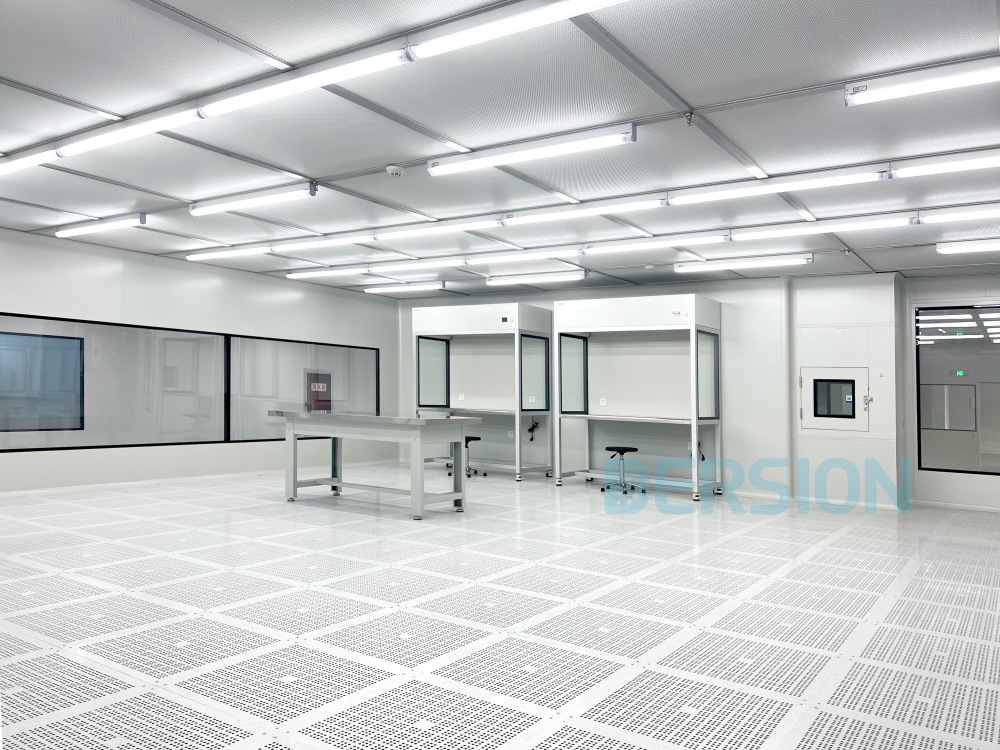
We design systems around the intended application, including ISO Class 5–8 environments where appropriate. Our approach considers applicable ISO, GMP, FDA, ISO 13485 and USP requirements according to the project. View our cleanroom certifications and quality credentials. Final classification and regulatory compliance must be demonstrated through the applicable tests, qualification and operational controls.
Integrated Systems, Modular Flexibility and Global Support
DERSION coordinates modular structures, HVAC, FFUs, HEPA filtration, lighting, controls and supporting equipment within the agreed scope. The modular design supports future modification and potential relocation. Our international service model includes US installation resources, Australian agent support, Middle East project-based delivery and European remote or supervised installation arrangements. Overseas systems are supported by a three-year warranty subject to contract terms.
| DERSION capability | Customer benefit |
|---|---|
| Established in 2005 | Long-term cleanroom industry experience |
| Factory-direct manufacturing | Visibility into production and quality |
| Customized 3D engineering | Project-specific configuration |
| Integrated HVAC and equipment | Simplified system coordination |
| Modular prefabrication | Efficient on-site assembly |
| Expandable modular structure | Flexibility for future changes |
| International support and 3-year overseas warranty | Project and lifecycle support |
Real-World Modular Cleanroom Projects by DERSION
Comparable project references are essential when selecting a manufacturing partner. These examples show different industries, facility sizes and international delivery contexts.
Case Study 1: ISO 8 Medical Device Cleanroom in Saudi Arabia
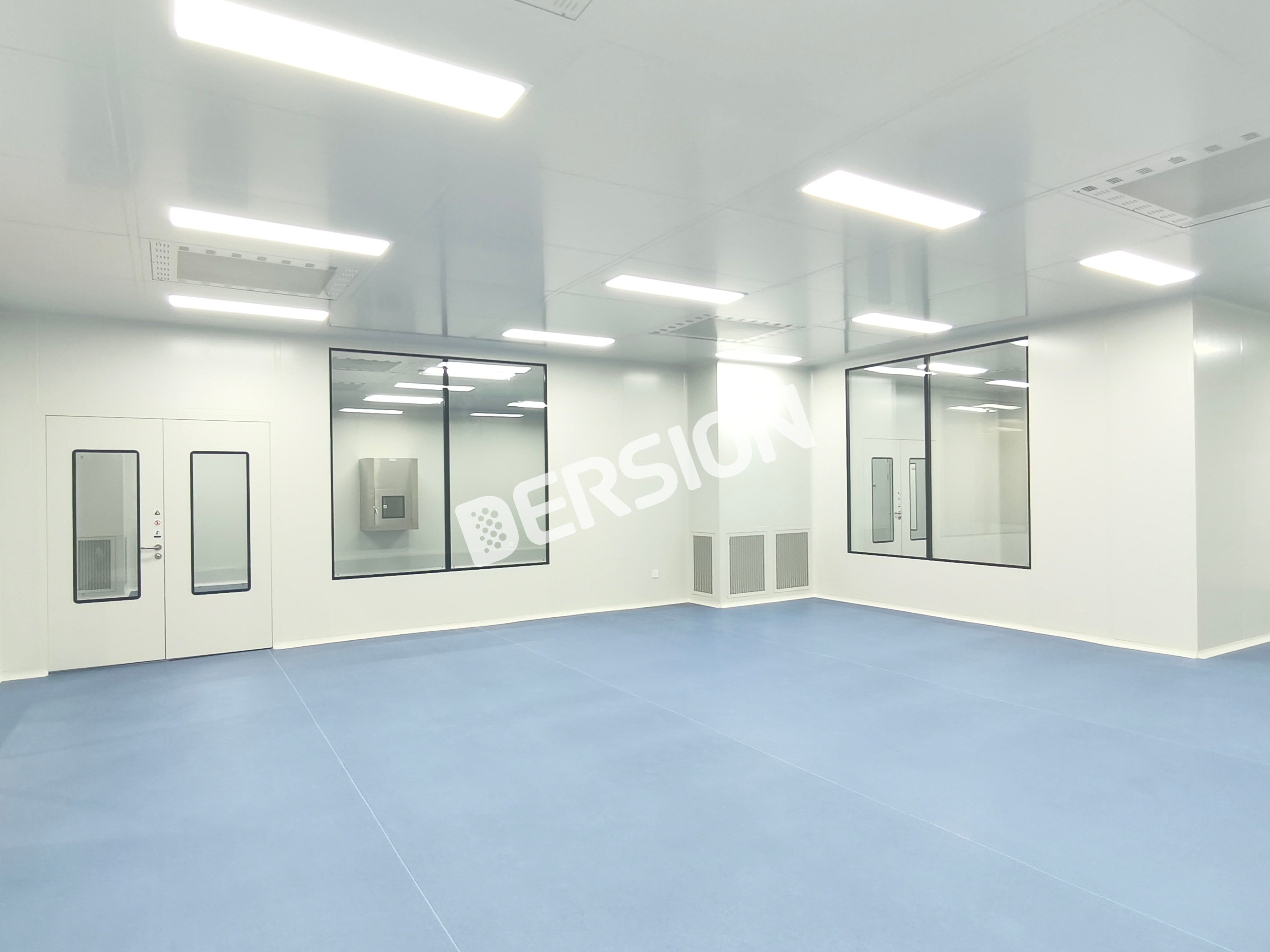
Jeddah, Saudi Arabia | ISO 8 | 530 m²
A controlled production environment for surgical instrument manufacturing. DERSION’s project scope included design, manufacturing, installation and commissioning, with a customized HVAC solution.
View the full project case study →
Case Study 2: ISO 7 Biotechnology Cleanroom in Texas, USA

Texas, USA | ISO 7 | 4,000 ft² (approximately 372 m²) | 2023
A modular facility supporting cell biology research. The project illustrates customized controlled environments for biotechnology applications.
View the full project case study →
Case Study 3: 304 m² GMP Cleanroom Project

Regulated manufacturing | Class 10,000 | 304 m² | 2025
This project illustrates cleanroom planning and modular system integration around specified cleanliness requirements for regulated manufacturing.
View the full project case study →
Case Study 4: ISO 8 Cosmetics Cleanroom in France
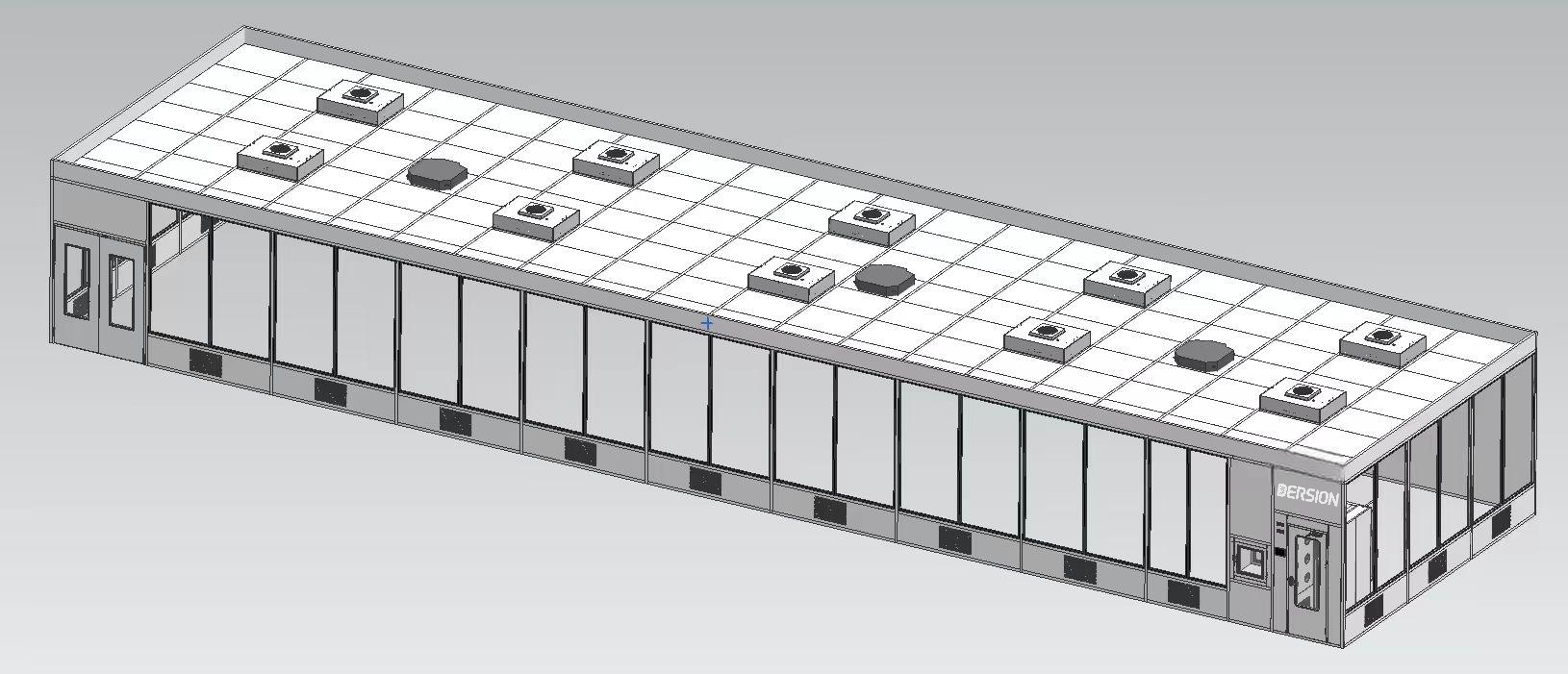
France | ISO 8 | 2,000 ft² (approximately 186 m²)
A controlled modular production environment supporting skincare and cosmetics manufacturing and packaging. The project demonstrates the adaptation of modular cleanrooms to European production requirements.
View the full project case study →
Frequently Asked Questions About Modular Cleanroom Manufacturers
How do I choose the best modular cleanroom manufacturer?
Choose a supplier with relevant projects, verifiable manufacturing facilities, engineering expertise, compliance support, transparent quotations and suitable installation services. Compare equivalent technical requirements and delivery scope rather than initial purchase price alone.
What is the difference between a cleanroom manufacturer and a cleanroom supplier?
A manufacturer produces modular systems or components, while a supplier may distribute products made by others. An integrated solutions provider combines manufacturing with design, HVAC integration, equipment selection and installation support. Verify the actual scope of each company.
How much does a modular cleanroom cost?
Cost depends on floor area, required ISO classification, HVAC configuration, environmental conditions, equipment, installation location and scope of supply. Request an itemized quotation for your specific project. A basic enclosure and a fully integrated cleanroom are not directly comparable.
What certifications should a cleanroom manufacturer have?
Relevant credentials may include ISO 9001 and applicable product conformity documentation. Installed cleanrooms should be tested to the agreed ISO 14644 and other performance requirements. Manufacturer certificates alone do not establish the regulatory compliance of the customer’s production facility.
Can a manufacturer meet ISO Class 7 or ISO Class 8 requirements?
Yes. Properly engineered modular systems can achieve these particle cleanliness levels using appropriate filtration, airflow, enclosure integrity and contamination controls. Installed performance must be verified under the specified test conditions.
Can modular cleanrooms meet GMP requirements?
Modular systems can support GMP manufacturing when properly designed, installed, qualified and operated. GMP compliance also depends on process controls, documentation, personnel practices, maintenance and contamination control. An enclosure alone cannot guarantee GMP compliance.
How long does it take to manufacture and install a modular cleanroom?
Timing depends on design complexity, size, equipment availability, factory capacity, shipping, site readiness and testing. Prefabrication can reduce site work, but request a complete milestone schedule rather than relying on factory lead time alone.
Can modular cleanrooms be expanded or relocated?
Many modular systems are designed for disassembly, reconfiguration and expansion. Feasibility depends on structural design, HVAC capacity, component condition and new site conditions. Modified or relocated systems may require additional testing.
Is it reliable to buy a modular cleanroom from China?
It can be, provided the individual manufacturer has verifiable production facilities, relevant international projects, clear engineering documentation and a suitable installation and warranty arrangement. Evaluate supplier capabilities rather than country of origin alone.
Do modular cleanroom manufacturers provide international installation support?
Many offer local partners, on-site supervision, installation instructions or remote engineering guidance. Availability varies by manufacturer, country and scope. Confirm the support model and related costs before ordering.
What information is needed to request a modular cleanroom quotation?
Provide the industry, process, installation country, required ISO class, floor area, ceiling height, environmental requirements, equipment layout and target timeline. Preliminary drawings are useful even if the full URS has not been completed.
Conclusion: Choosing the Right Modular Cleanroom Partner for Long-Term Success
Selecting a modular cleanroom manufacturer is a strategic investment in production capability. Evaluate the twelve factors in this guide, verify comparable references, normalize quotations and use the supplier scorecard to reduce procurement risk. A well-engineered cleanroom should support product quality, operational efficiency and future expansion.
Request a Customized Modular Cleanroom Solution
Share your industry, project location, target ISO classification, room dimensions, layout and environmental requirements with DERSION. Our team can help develop a project-specific proposal covering design, modular manufacturing, equipment integration, installation and commissioning support within the agreed scope.
Planning Your Next Modular Cleanroom Project?
Customized engineering · Factory-direct manufacturing · Global installation support · Three-year overseas warranty (contract terms apply)
DERSION — Global Modular Cleanroom Solutions Provider
Modular Technology · Smart Manufacturing · Global Support
Post time: Nov-24-2026