
Cleanroom Requirements for Carbon–Silicon Advanced Materials Manufacturing
Carbon–silicon advanced materials, most notably silicon carbide (SiC) and carbon-based composite materials, are key enablers in next-generation industries such as power semiconductors, electric vehicles, renewable energy, and high-frequency electronics.
As wide-bandgap semiconductor materials, SiC and related carbon–silicon compounds offer high breakdown voltage, excellent thermal conductivity, and superior electron mobility—but these advantages can only be realized under highly controlled cleanroom environments.
To ensure material purity, structural integrity, and high production yield, cleanrooms for carbon–silicon materials manufacturing must meet stringent environmental control standards across multiple dimensions.
1. Air Cleanliness Requirements
Particle contamination is one of the most critical risks in carbon–silicon material production. Fine particles can embed into the crystal lattice or material surface, directly degrading electrical and structural performance.
-
Typical cleanroom classification:
-
ISO Class 5 (Class 100) or better, depending on process sensitivity
-
-
ISO 5 requirement:
-
≤ 3,520 particles ≥ 0.5 μm per cubic meter of air
-
-
Application areas:
-
Crystal growth, wafer processing, epitaxy, graphene layer formation
-
High-efficiency HEPA or ULPA filtration systems are essential to maintain stable particle control throughout continuous production.
2. Temperature and Humidity Control
Stable thermal and humidity conditions are crucial to prevent process drift, material stress, and structural non-uniformity.
-
Temperature:
-
22 ± 1 °C (process-dependent fine control recommended)
-
-
Relative Humidity:
-
45% ± 5% RH
-
Proper humidity control prevents:
-
Moisture absorption by sensitive materials
-
Metal corrosion and condensation risks
-
Electrostatic charge accumulation caused by excessively low humidity
Precision HVAC systems with tight tolerance control are therefore mandatory.
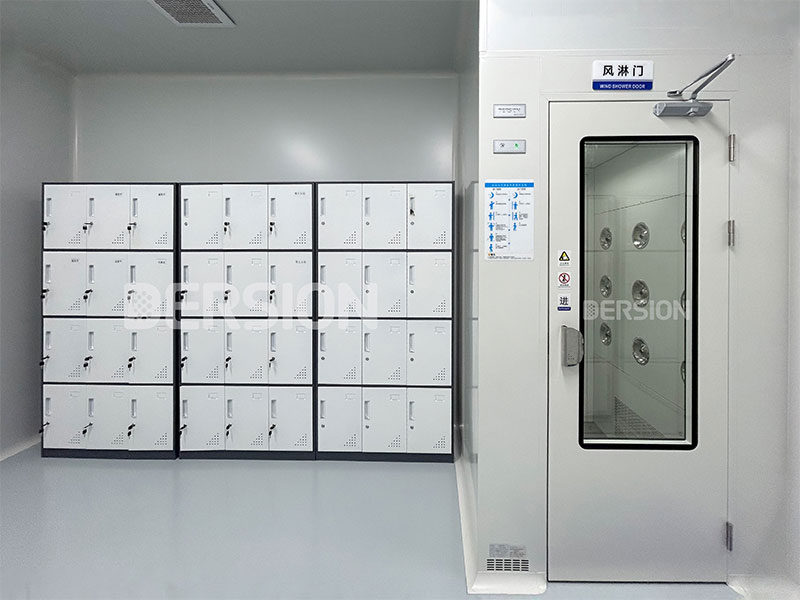
3. Airflow Design and Pressure Differentials
To effectively remove airborne contaminants and prevent cross-contamination between process zones, optimized airflow organization is required.
-
Airflow type:
-
Vertical laminar flow for critical production areas
-
-
Pressure differential:
-
+5 to +15 Pa between adjacent clean zones
-
Dedicated exhaust systems must be installed to safely handle process-related gases, such as silane and volatile organic compounds (VOCs), ensuring compliance with environmental and safety regulations.
4. Electrostatic Discharge (ESD), Vibration, and EMI Control
Carbon–silicon materials and related processing equipment are highly sensitive to electrostatic discharge, vibration, and electromagnetic interference.
ESD Control Measures
-
Anti-static epoxy flooring and wall coatings
-
Grounding resistance ≤ 1 Ω
-
Full ESD cleanroom garments for operators
Vibration & EMI Control
-
Vibration limits (e.g., < 1 gal in photolithography or precision processing areas)
-
Controlled electromagnetic interference (0.1–1000 Hz)
All tools and furniture should be manufactured from low-outgassing materials such as stainless steel or PTFE to minimize metal ion and chemical contamination.
5. Personnel, Material Flow, and Environmental Monitoring
Human activity is a primary contamination source in cleanrooms. Strict operational protocols are essential.
-
Personnel control:
-
Full gowning procedures with cleanroom suits, gloves, masks
-
-
Material transfer:
-
Air showers and pass-through chambers for materials and tools
-
Continuous Monitoring & Certification
-
Real-time particle counters
-
Temperature & humidity sensors
-
Differential pressure gauges
-
Regular cleanroom certification in accordance with ISO 14644 standards
These measures ensure long-term environmental stability and consistent product quality.
Conclusion
Cleanrooms for carbon–silicon advanced materials manufacturing must be designed with the core objectives of minimal particle interference and maximum environmental stability.
Through comprehensive control of cleanliness, airflow, thermal conditions, electrostatics, and monitoring systems, manufacturers can achieve the high purity and structural consistency required for advanced semiconductor and energy applications.
A properly engineered cleanroom is not only a compliance requirement—it is a critical success factor for high-performance carbon–silicon materials production.
Post time: Jan-20-2026