
Automotive paint spray cleanrooms are engineered environments designed to control airborne particles, temperature, humidity, airflow, and contaminants during vehicle coating processes.
They are essential for achieving uniform paint finish, corrosion resistance, and long-term surface durability.
Automotive painting typically includes surface sanding, primer spraying, basecoat application, clear coat spraying, and low-temperature curing (60–80°C). Any uncontrolled dust, airflow disturbance, or VOC accumulation can directly lead to paint defects, rework, or quality failures.
Below are the core technical requirements for an automotive spray painting cleanroom.
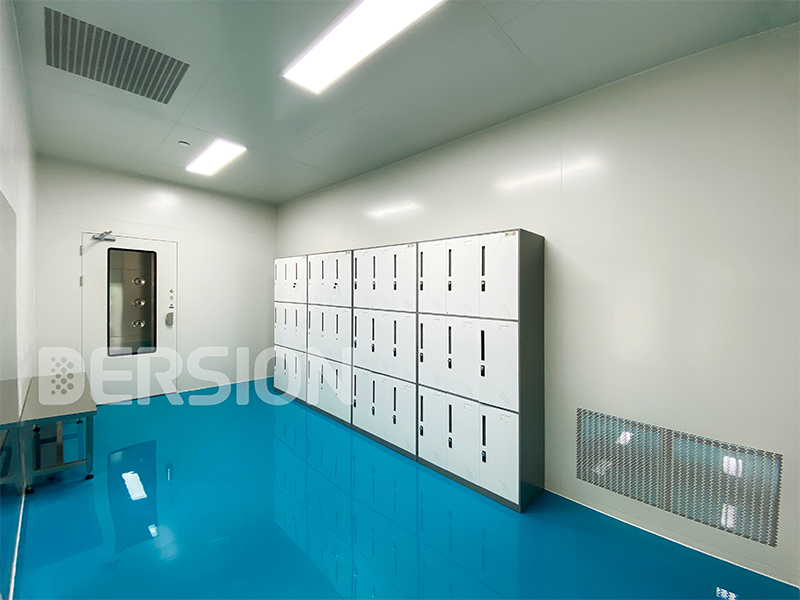
1. Cleanliness Level Requirements
Automotive paint spray cleanrooms generally follow ISO 14644 standards:
-
General painting areas: ISO Class 8 (Class 100,000)
-
Core spray zones: ISO Class 7 (Class 10,000)
-
High-precision coating areas (basecoat / clear coat): ISO Class 6 (Class 1,000)
To achieve stable cleanliness levels, the cleanroom must be equipped with a three-stage air filtration system:
-
Pre-filter
-
Medium filter
-
HEPA filter (terminal filtration)
HEPA filters should be regularly leak-tested to ensure long-term particle control and coating quality.
2. Temperature & Humidity Control
Stable environmental conditions are critical to preventing paint defects such as orange peel, sagging, blistering, or uneven drying.
Recommended parameters:
-
Temperature:
-
Operating range: 20–25°C
-
Summer: 22–25°C
-
Winter: ≥18°C
-
-
Relative Humidity (RH):
-
Basecoat stage: 45–55% RH
-
Topcoat / clear coat stage: 50–60% RH
-
A dedicated cleanroom HVAC system with precise temperature and humidity control is required to maintain consistency across production shifts.
3. Ventilation & Airflow Design
Automotive paint spray cleanrooms typically adopt a unidirectional (laminar) airflow system:
-
Vertical laminar airflow over spray zones
-
Laminar flow ceilings or airflow canopies above vehicles
-
Uniform air velocity to minimize paint mist diffusion
Key airflow requirements:
-
Air changes per hour (ACH): ≥20
-
Room pressure: Slight positive pressure
-
Pressure differential: ≤20 Pa
-
Pressure gradient design between zones to prevent cross-contamination
Fresh air must pass through HEPA filtration before entering the cleanroom, while exhaust systems efficiently remove paint mist and VOCs.
4. Cleanroom Structure & Materials
All cleanroom surfaces must be designed for easy cleaning, chemical resistance, and contamination control:
-
Walls & ceilings:
-
Smooth-coated steel panels or stainless steel
-
Seamless installation with rounded corners
-
-
Flooring:
-
Anti-static epoxy self-leveling floor
-
Or chemical-resistant PVC flooring
-
Lighting requirements:
-
Illuminance: ≥500 lux
-
Color temperature: 5000–6000K (daylight white)
-
Diffused, glare-free lighting to reveal surface defects
During curing stages, lighting may be reduced to ~200 lux, with UV-filtered glass to minimize ultraviolet impact on coatings.
5. Safety & Environmental Compliance
Automotive spray painting involves flammable materials and VOC emissions, requiring strict safety controls:
-
Explosion-proof electrical systems
-
Fire suppression and sprinkler systems
-
Emergency exhaust and ventilation
-
Flammable gas and VOC monitoring sensors
Environmental protection systems include:
-
Paint mist treatment units (water curtain + filtration)
-
Activated carbon adsorption systems
-
VOC abatement solutions compliant with local emission regulations
These measures ensure compliance with environmental, occupational safety, and air quality standards.
6. Cleanroom Operation & Maintenance
Long-term cleanroom performance depends on:
-
Defined cleaning and maintenance SOPs
-
Regular particle count testing
-
Filter replacement schedules
-
Environmental monitoring and documentation
A well-maintained cleanroom ensures consistent coating quality, reduced rework, and stable production efficiency.
FAQ – Automotive Paint Spray Cleanroom
❓ What ISO class is required for automotive paint spray cleanrooms?
Most automotive paint spray cleanrooms operate at ISO Class 7–8, while high-precision coating areas may require ISO Class 6 to prevent paint surface defects.
❓ Why is temperature and humidity control critical in car painting?
Unstable temperature or humidity can cause uneven solvent evaporation, paint sagging, bubbles, or drying defects, directly affecting surface appearance and durability.
❓ What ventilation system is used in automotive spray cleanrooms?
Automotive paint cleanrooms typically use vertical laminar airflow systems combined with high air change rates to control paint mist, VOCs, and airborne particles.
❓ How are VOC emissions treated in paint spray workshops?
VOC emissions are managed using water curtain systems, activated carbon adsorption, and dedicated exhaust systems to meet environmental regulations.
❓ Can automotive paint cleanrooms be modular?
Yes. Modular cleanroom systems allow faster installation, cost control, and scalability, making them ideal for automotive refinishing and production upgrades.
Post time: Dec-26-2025